How cortisol runs your sleep-wake clock
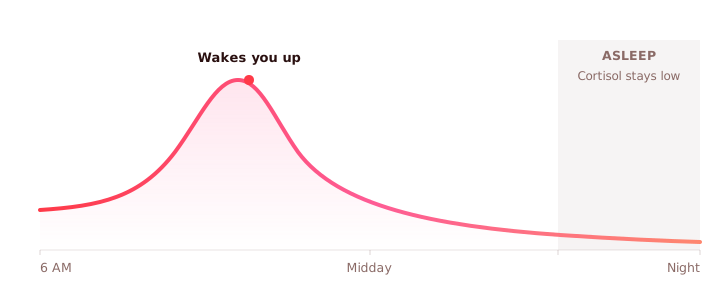
Cortisol is your body's main stress hormone, and it follows a daily rhythm. It rises sharply in the morning to help you wake up and feel alert, drifts down through the afternoon, and reaches its lowest point late at night. That nighttime low is part of what lets your body wind down and stay asleep.
Think of it as the opposite curve to the one that helps you sleep. When cortisol is doing its job, it steps back in the evening so rest can take over. When it doesn't step back, sleep gets harder.
Why you wake up at 3 a.m.
A lot of people wake in the small hours for no obvious reason. One common explanation is an early or raised overnight cortisol rise that pulls you out of deeper sleep before your body is ready. Ongoing stress, late caffeine, alcohol before bed, and an irregular schedule can all push that rise earlier or higher.
The frustrating part is that you can't feel cortisol moving. You only feel the result: lighter sleep, early waking, or a mind that switches on at 3 a.m.
A single test can't see your night
Cortisol is a pattern, not a single number. A blood test at 8 a.m. tells you nothing about what happened at 2 a.m. To understand how cortisol and sleep interact, you need the shape of the whole night, not one daytime snapshot. That is exactly what a one-off test misses, and why people are turning to continuous monitoring.
How to see your cortisol-sleep pattern
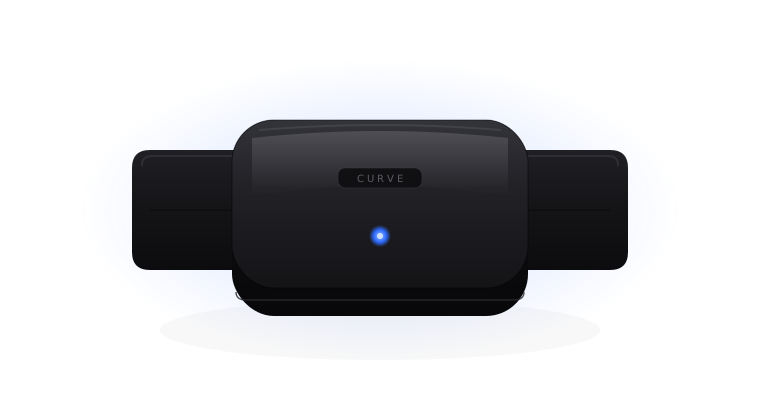
The Auromone Curve reads cortisol from a trace of sweat on your wrist about 720 times a day, overnight included. Instead of a single morning value, you see the evening drop and the morning rise lined up against your sleep. Over a couple of weeks you can watch whether a late workout, a glass of wine, or a stressful day changes the shape of your night.
For the full picture of what cortisol is and how it's measured, start with Cortisol 101, or see how the measurement methods compare.
Habits that support a healthy evening drop
These are general wellness habits, not medical advice, but they tend to support the natural evening decline:
- Get daylight early in the morning, which helps anchor the rhythm.
- Move your last caffeine earlier in the day.
- Keep a steady wake time, even on weekends.
- Give yourself a real wind-down before bed and limit late alcohol.
The point of measuring is to stop guessing. When you can see your own pattern, you can tell which of these actually moves it.
This guide is for general wellness education only. The Auromone Curve is a general wellness device, not a diagnostic, and does not replace medical advice. If sleep problems persist, talk to a healthcare provider.