What is cortisol?
Cortisol is your body's main stress hormone, made by your adrenal glands. It helps set your energy, sleep, metabolism, blood sugar, immune response, and how you react to stress. Almost every system in your body responds to cortisol, which is why its pattern matters so much.
The cortisol curve (your daily rhythm)
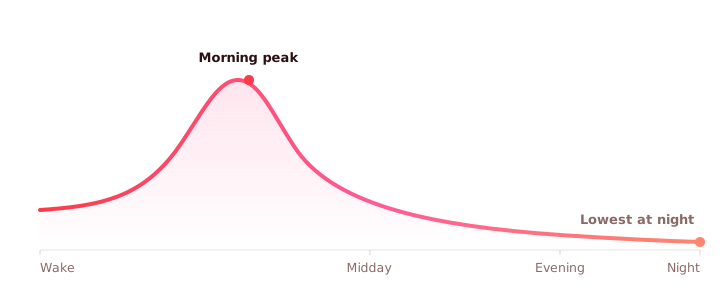
Cortisol isn't one fixed level. It follows a daily rhythm (some call it the diurnal curve):
- A sharp rise in the first 30–45 minutes after you wake up.
- A morning high that gives you energy and focus.
- A slow drop through the day to its lowest point overnight, so your body can rest.
Because cortisol is a pattern, not a point, the useful question is rarely "is it high?" but "is it rising and falling at the right times?" A level that looks fine at 8 AM can look very different at 10 PM. That is exactly what a single test can miss.
Cortisol, sleep, energy & stress
A healthy cortisol rhythm is part of feeling rested in the morning and winding down at night. When the rhythm flattens or shifts, say from ongoing stress, poor sleep, or night-shift schedules, people often notice it as restless sleep, afternoon energy crashes, or a sense that the battery never fully recharges. Seeing the rhythm is the first step to knowing whether the changes you make (sleep, exercise, light, recovery) are actually moving it.
How is cortisol measured?
There are four common ways to measure cortisol today:
- Blood test. The standard for a single moment, but one needle, one snapshot, at a clinic.
- Saliva test (e.g. ELI Health, DUTCH). Real cortisol, collected on a schedule, usually mailed to a lab with days of waiting.
- 24-hour urine. One total for the whole day, with no view of the shape of the day.
- Continuous wearable monitoring. Reads cortisol from a trace of sweat on the wrist, through the day and night.
The first three each give you a snapshot or two. Only all-day monitoring shows the full daily pattern. For a detailed side-by-side, see how cortisol measurement methods compare.
Can a wearable measure cortisol?
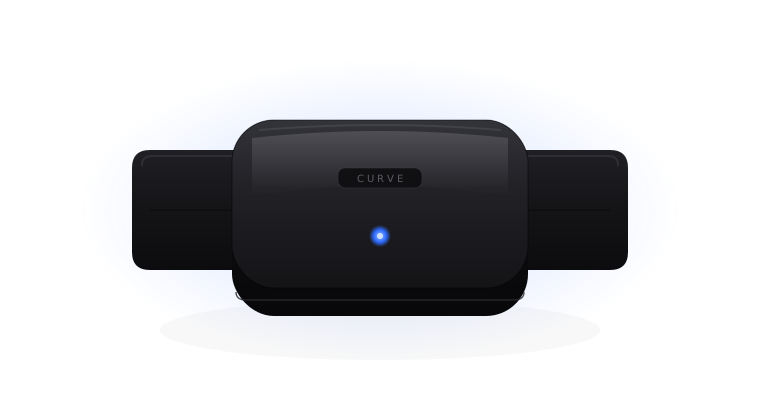
Most wearables cannot. The Apple Watch, Oura Ring, Whoop, and Garmin guess at "stress" from your heart rate, which is only a stand-in, not the hormone. The Auromone Curve is the first consumer wearable to read cortisol itself, straight from the trace of sweat on your wrist, about 720 readings a day, using a small swappable sensor. In our bench testing it stayed within about 8% of a lab blood test, about as close as the glucose monitors people with diabetes trust. It's the same idea as a glucose monitor, but for cortisol.
How to track your cortisol at home
If you want a few timed readings, an at-home saliva kit works. If you want to see the whole pattern, how cortisol climbs and comes back down across real days, a continuous wearable is the only practical way to do it without repeated lab visits. The Auromone Curve reads all day, shows your day in a companion app, and lets you see how sleep, training, and stress change your rhythm over weeks.
This guide is for general wellness education only. The Auromone Curve is a general wellness device, not a diagnostic, and does not replace medical advice. Always consult a healthcare provider about your health.