The short, honest answer
If you have read that cortisol is the reason for stubborn weight, the truth is more measured. Cortisol is one factor among many, and the research points to associations rather than a single cause you can switch off. It is your body's main stress hormone, and it interacts with sleep, diet, activity, genetics and a handful of other hormones. Untangling its exact contribution to weight is genuinely hard, which is why honest sources talk about links and patterns instead of magic causes.
So the useful framing is this: chronically high or badly timed cortisol is associated with more fat around the middle, but it almost never travels alone. It shows up next to short sleep, ongoing stress and less consistent eating and movement. Correlation is not the same as a lever you can pull. Cortisol is part of the picture, not the whole explanation, and treating it as the sole culprit tends to lead people toward quick fixes that don't hold up.
It also helps to remember what cortisol is actually for. It is not a "bad" hormone. You need it to wake up, to handle a busy morning, and to respond when something demands energy. The concern with weight is not cortisol existing, but cortisol staying elevated when it should be winding down, over weeks and months rather than minutes. That distinction, between a normal daily rhythm and a rhythm that has drifted, is where the honest conversation about weight actually lives.
How cortisol relates to appetite and fat storage
Cortisol's main job is to make energy available. When it rises, it raises blood glucose so your body has fuel on hand, which is exactly what you want in a short burst of stress. The complication is what happens when that signal stays switched on. Over longer periods, elevated cortisol is associated with changes in appetite, cravings for denser foods and a tendency to store more fat in the abdomen, the deeper visceral fat around your organs rather than just under the skin.
There is research behind this pattern. In one study of women, greater cortisol reactivity to stress was associated with more central (abdominal) fat — Epel et al., Psychosomatic Medicine, 2000. It is worth reading that carefully: the finding is an association between how strongly cortisol responded to stress and where fat was carried, not proof that cortisol single-handedly built the fat. Still, it is a real thread that helps explain why chronic stress and midsection weight so often show up together.
Why the abdomen specifically? Visceral fat tissue is relatively rich in cortisol receptors, so it appears to be more responsive to the hormone than fat elsewhere on the body. That is one proposed mechanism for the association, and it fits the everyday observation that stress-related weight tends to settle around the middle rather than spread evenly. But mechanism is not destiny. Plenty of people under real stress don't follow this pattern at all, which is exactly why researchers describe it as a tendency across groups rather than a rule for any one person.
Why "cortisol belly" is oversimplified
"Cortisol belly" is a catchy phrase, and it does point at something real, but it flattens a complicated picture into a single villain. Here is how the popular claims line up against what the evidence actually supports.
| What you've heard | What's actually supported |
|---|---|
| Cortisol makes you gain belly fat directly | Chronic stress is associated with more central fat, usually alongside poor sleep and diet, not caused by cortisol alone. |
| A "cortisol belly" is a specific, diagnosable thing | It's a popular label, not a medical diagnosis. Where you store fat is linked to genetics, sleep, diet, activity and hormones together. |
| Lowering cortisol melts belly fat | No habit or product removes fat on its own. Habits linked to a healthier cortisol pattern support the whole picture, slowly. |
| High cortisol always means weight gain | Cortisol's effect on weight is a tendency seen across groups, not a guarantee for any one person. |
| If you're stressed, it must be cortisol | Felt stress and measured cortisol don't always match. The daily rhythm and its timing matter more than a single high reading. |
The stress–sleep–weight loop
One reason cortisol is hard to isolate is that it sits inside a loop. Stress tends to shorten and fragment sleep, and short sleep is associated with hunger. Short sleep shifts appetite hormones — lower leptin, higher ghrelin, more hunger — Spiegel et al., Annals of Internal Medicine, 2004. In plain terms, poor sleep can leave you feeling less full and more hungry the next day, which nudges eating in a direction that is linked to weight gain over time.
Now add cortisol back in. Stress raises cortisol, and cortisol timing is tied to sleep quality, so a stressful stretch can quietly feed the same loop from several sides at once. That is why the honest picture is a web of associations rather than a straight line. If you want the sleep side of this in detail, our guide on cortisol and sleep walks through how the daily rhythm and your nights affect each other.
Habits that help
None of these are treatments, and none change weight on their own. They are general wellness habits associated with a steadier cortisol pattern and a healthier relationship to appetite:
- Keep sleep regular. A consistent wake time and enough hours are linked to steadier appetite hormones and a healthier cortisol rhythm.
- Manage everyday stress. Whatever genuinely lowers your stress load, from walks to breathing to boundaries, supports the whole loop.
- Keep exercise balanced. Regular movement helps, but relentless extreme training is itself a stressor, so balance beats punishment.
- Eat steady meals. Reasonably regular, balanced meals are associated with more even blood sugar and fewer stress-driven cravings.
For a fuller walkthrough of the evidence-informed habits, see how to lower cortisol. The point of any of this is to support the whole picture, not to chase a number.
See whether your pattern is shifting
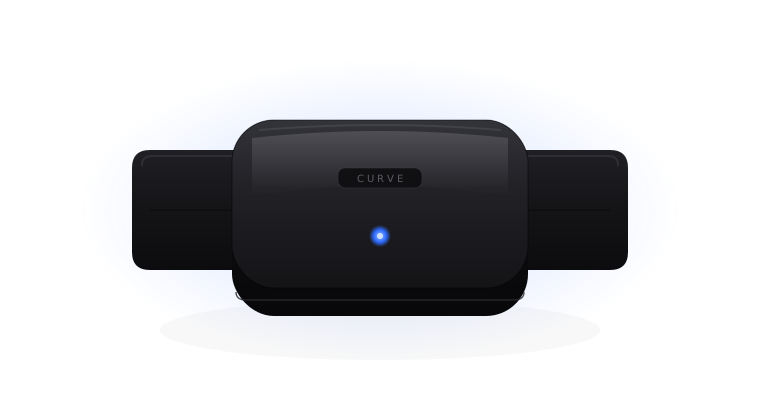
Because cortisol is a pattern rather than a single value, the interesting question isn't just whether it is high on one morning. It is whether your daily rhythm is drifting over weeks as your stress, sleep and routine change. The Auromone Curve reads cortisol from a trace of sweat on your wrist about 720 times a day, so you can watch the shape of your days instead of guessing.
To be clear about what that is and isn't: the Curve is a general wellness device. It does not cause weight loss, it does not treat anything, and it does not diagnose. What it offers is visibility, so you can see whether the habits you're working on are associated with a steadier pattern for you. For the basics of what cortisol is and how it's measured, start with Cortisol 101.
This guide is general wellness education only. It is not medical, nutritional, or weight-loss advice, and the Auromone Curve is a general wellness device, not a diagnostic. Nothing here is a treatment for weight or any condition. If you have concerns about your weight, metabolism, or stress, talk to a healthcare provider.