The quick answer
None of the mainstream wearables measure cortisol. The Apple Watch, Whoop, Oura Ring, Garmin, Samsung Galaxy Watch and Fitbit all infer "stress" from physiological proxies, mostly your heart rate and heart-rate variability, rather than reading the cortisol hormone. They are excellent at what they do, but a stress score is a calculation, not a hormone measurement.
That distinction matters, because cortisol is the actual stress hormone your body releases. To read it, a device has to detect the molecule itself, which is a different kind of sensor from the optical heart-rate readers in today's watches and rings. Those sensors shine light through your skin to time your pulse; sensing a hormone means doing a tiny bit of chemistry on your body instead.
So when a watch tells you your stress is high, it is making an educated guess from how your heart is beating. That can be genuinely useful, but it is not the same as knowing your cortisol level. Below is exactly what each device tracks, and the one wearable that reads cortisol directly.
What each wearable actually measures
Here is what each popular device tracks today. None of them read cortisol; each one estimates stress or recovery from other signals.
Apple Watch
The Apple Watch does not measure cortisol. It reads heart rate and heart-rate variability (through its optical PPG and ECG sensors), wrist temperature and respiratory rate, and it surfaces those through features like Mindfulness and Vitals. It doesn't even publish a single "stress score," so there is certainly no cortisol reading behind one.
Whoop
Whoop does not measure cortisol. Its band tracks heart-rate variability, resting and continuous heart rate, respiratory rate, skin temperature, blood oxygen and sleep, then combines them into strain and recovery scores. These are thoughtful estimates of physiological load, but they are built from your cardiovascular signals, not from the cortisol molecule.
Oura Ring
The Oura Ring does not measure cortisol. Its Daytime Stress feature is calculated from heart rate, heart-rate variability, skin temperature and motion. Those are genuine signals about how your body is responding, but the ring is inferring stress from them, not sampling a hormone.
Garmin
Garmin does not measure cortisol. Its Body Battery and stress score are derived from heart-rate variability, processed with Firstbeat analytics. The result is a helpful running estimate of stress and recovery through the day, but it comes entirely from your heart-rate data, not from cortisol.
Samsung Galaxy Watch
The Samsung Galaxy Watch does not measure cortisol. Its stress reading is estimated from heart-rate variability captured by the optical (PPG) sensor. The watch also has a BIA sensor, but that measures body composition, such as body fat and water, and has nothing to do with stress or cortisol.
Fitbit
Fitbit does not measure cortisol. Its Stress Management Score is built from heart rate, heart-rate variability, sleep and activity. The EDA scan on some models measures electrodermal activity, tiny changes in the skin's electrical conductance from your sweat glands. That is a skin-conductance signal, not a cortisol measurement.
What a "stress score" actually is
Almost every wearable stress feature works the same way underneath: it watches your heart-rate variability, the small beat-to-beat changes in your pulse, and uses that as a stand-in for your nervous system. When variability drops, the algorithm reads it as more stress; when it rises, as more recovery. It is a real and useful signal, but it is one step removed from the hormone.
Think of it like reading the temperature. Cortisol is the thermometer, the direct measurement. A heart-rate stress score is closer to guessing the temperature from how people are dressed: often in the right direction, but an inference rather than a reading. When the two disagree, you have no way of knowing which was closer to the truth, because you never saw the hormone. For the deeper version of this distinction, see cortisol and stress.
This is also why a stress score can feel off. It can flag "high stress" during hard exercise, when a rising heart rate is simply doing its job, or miss a stressful, still afternoon where your cortisol climbs but your pulse barely moves. The proxy is real, but it is not the hormone.
The wearable that does read cortisol
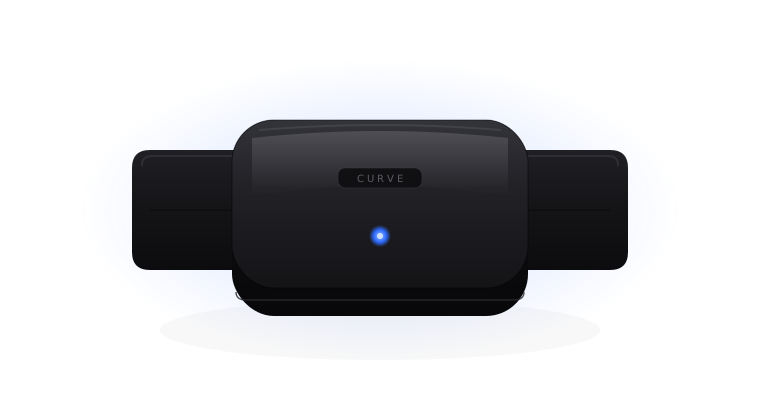
The Auromone Curve is built specifically to read the cortisol molecule. Instead of inferring stress from your pulse, it samples a trace of sweat on your wrist and detects cortisol itself, about 720 times a day. That gives you the actual hormone rising and falling across the day and night, rather than a score calculated from heart rate.
Because it reads the hormone directly, the Curve can show you the shape of your cortisol day: the morning rise, the slow fall, and whether it settles at night the way it should. That is something a heart-rate stress score, no matter how refined, cannot give you.
It is the same idea as a continuous glucose monitor, but for cortisol: a small swappable sensor doing the chemistry on your wrist, with the readings streamed to a companion app. Over a couple of weeks you can watch how sleep, training and stressful days change your rhythm, and whether the habits you try actually move it. To see how it stacks up against rings, bands and lab tests, read how the measurement methods compare, or learn more about the Curve band itself.
At a glance
Every mainstream watch and ring estimates stress from heart-rate signals. Only a dedicated cortisol wearable reads the hormone directly.
| Device | Measures cortisol? | What it actually tracks |
|---|---|---|
| Apple Watch | No | Heart rate, HRV, wrist temperature, respiratory rate |
| Whoop | No | HRV, heart rate, respiratory rate, skin temp → strain & recovery |
| Oura Ring | No | Heart rate, HRV, skin temperature, motion (Daytime Stress) |
| Garmin | No | HRV via Firstbeat (Body Battery & stress) |
| Samsung Galaxy Watch | No | HRV from PPG; BIA sensor reads body composition |
| Fitbit | No | Heart rate, HRV, sleep, activity; EDA = skin conductance |
| Auromone Curve | Yes, directly | Cortisol from sweat, ~720 / day |
Device names are trademarks of their respective owners. Features reflect publicly available information as of mid-2026 and may change as each product updates.
This guide is for general wellness education only. The Auromone Curve is a general wellness device, not a diagnostic, and does not replace medical advice.