Signs that need care today
An article that explains a cluster of ordinary symptoms is exactly the kind of article that can send a seriously ill person back to bed to wait it out. So the urgent material comes first, before any of the explaining. This page does not tell you when you are fine. It tells you when to act.
Call emergency services, or go to an emergency department, for any of these:
- Deep, rapid breathing and breath that smells sweet or fruity, with vomiting, stomach pain, and heavy thirst and urination. This is diabetic ketoacidosis, which MedlinePlus calls "a life-threatening problem" that occurs when the body starts breaking down fat far too fast. The breathing and the breath are what separate it from a stomach bug, which is what it otherwise resembles. MedlinePlus says to seek emergency care for decreased consciousness, fruity breath, nausea and vomiting, or trouble breathing. Never having been told you have diabetes does not rule this out: MedlinePlus states that "DKA is sometimes the first sign of type 1 diabetes in people who have not yet been diagnosed with diabetes."
- Severe weakness, drowsiness or confusion, vomiting and diarrhoea, severe pain in the abdomen, lower back or legs, dizziness or fainting on standing, or collapse. This is an adrenal crisis, the emergency form of low cortisol, and it also looks like a bad stomach bug. If you carry an emergency hydrocortisone injection, use it now as you were trained to, then call emergency services. If you do not carry one, call emergency services and say: "I may have adrenal insufficiency and may need hydrocortisone." The trap to close: if you are vomiting, you cannot absorb a steroid tablet. Being unable to keep medication down is itself the emergency, not a reason to swallow a dose and lie down. NIDDK states that "The most common cause of adrenal insufficiency overall is suddenly stopping corticosteroids after taking them for a long time." The sick-day detail is in what coming off prednisone does to your own cortisol production.
- A high fever with heavy sweating, a heart rate over 140, and agitation, delirium or confusion, often with vomiting and diarrhoea. This is thyroid storm, which StatPearls describes as "an acute, life-threatening complication of hyperthyroidism" with mortality "estimated to be 8 to 25%". StatPearls gives "Fever of 104° F to 106°F with diaphoresis", about 40 to 41 °C, as a key presenting feature, alongside "Tachycardia of more than 140 HR/minute". Its triggers include abruptly stopping antithyroid medicine, infection, surgery, trauma, childbirth and recent iodinated contrast. An infection that explains the fever does not rule it out, because infection is one of its triggers. StatPearls is blunt about the timing: "One should not wait for lab results before starting treatment."
- Increasing drowsiness over weeks, a body temperature that is low, a slow heartbeat, slow shallow breathing, then stupor. This is myxedema coma, the emergency form of severe untreated low thyroid. NIDDK calls it "an extreme form of hypothyroidism in which the body's functions slow to a life-threatening point" and says it "requires immediate medical treatment." Endotext puts mortality "between 20% and 50%" and lists hypothermia, altered mental status and a precipitating event as the three defining features, with precipitants including "cold exposure, infection, drugs (diuretics, tranquillizers, sedatives, analgesics), trauma, stroke, heart failure, gastrointestinal bleeding." Read the temperature carefully here. It runs the wrong way: low, not high. A normal temperature is not reassurance in this one, it is the direction of travel.
- A sudden, severe headache, most often behind the eyes, with double vision, a drooping eyelid, loss of side vision, vomiting or confusion. This is pituitary apoplexy, a bleed into or loss of blood supply to the pituitary gland, which StatPearls calls "a medical and surgical emergency in many cases". It shuts down the hormone that drives cortisol production: StatPearls reports that the lack of ACTH secretion "occurs in more than two-thirds of the patients with apoplexy", and immediate management includes "prompt corticosteroid replacement therapy." Call emergency services and tell them you may have a pituitary problem and may need steroids.
- In pregnancy, or in the weeks after giving birth: sudden swelling of the hands and face, a headache that will not go away or is getting worse, vision changes, pain below the ribs on the right, or sudden weight gain. This is preeclampsia, which MedlinePlus defines as "high blood pressure and signs of liver or kidney damage that occur in women after the 20th week of pregnancy", and describes as including "Sudden weight gain over 1 to 2 days or more than 2 pounds". It can arrive after delivery, "most often within 48 hours." This is the one that a page like this can bury, because a puffy face and swollen hands is precisely what gets filed under hormones. MedlinePlus also warns that "Often, women who have preeclampsia do not feel sick." Contact your provider or emergency services the same day.
- Chest pain or pressure, breathlessness, or pain spreading to the arm, jaw, neck or back. Palpitations, breathlessness and a sense of dread are core search terms for hormonal anxiety, and they are also how a heart attack presents. This is not a symptom to interpret at home in either direction. Call emergency services.
- Thoughts of harming yourself. Depression sits on the symptom list of hypothyroidism and of adrenal insufficiency, and it is also a condition in its own right. NIMH's guidance is direct: "If you or someone you know is struggling or having thoughts of suicide, call or text the 988 Suicide and Crisis Lifeline at 988 or chat at 988lifeline.org. In life-threatening situations, call 911." This is not something to hold on to while tests are arranged.
Not tonight, but this week rather than this year
- Any vaginal bleeding after menopause, or bleeding and discharge that is not related to a period. The National Cancer Institute lists "Vaginal bleeding after menopause" and "Vaginal bleeding or discharge not related to menstruation (periods)" among the signs of endometrial cancer, and says to check with a doctor if you have them. Irregular bleeding in midlife is commonly attributed to the menopausal transition, which is exactly how this gets delayed.
- Bloating, feeling full quickly, pelvic or abdominal pain, or needing to urinate more often or more urgently. These are on the CDC's list of ovarian cancer symptoms, and its instruction is specific: "If you have any of the other signs for 2 weeks or longer and they are not normal for you, see a doctor." A changing waistline is the single most common thing filed under hormonal weight gain, and it is also the cardinal symptom here.
- Unexplained weight loss. It appears on NIDDK's symptom lists for type 1 diabetes, for hyperthyroidism and for adrenal insufficiency alike. It is not a symptom to wait out and see.
- A new swelling in the front of the neck. NIDDK lists "an enlargement in the neck, called a goiter" among the signs of hyperthyroidism. A new neck swelling is something to have examined rather than watched.
Nothing you can wear can find any of this. We make a cortisol sensor, so we should be the ones to say it. What follows is a description of clinical medicine, not an argument for a device.
Every sign above is useful as a positive. Almost none is safe as a negative
A sign is worth acting on when it is present. That is rarely the same as being worth trusting when it is absent, and on a page about a vague phrase this is the part that decides who gets seen.
- A normal temperature does not rule out an emergency. In myxedema coma the temperature is low by definition, so a normal reading is not evidence against it. Corticosteroid medicine also suppresses the response that produces a fever, so someone taking steroids can be seriously ill without one. Never use a thermometer to talk yourself out of being seen.
- A normal TSH does not rule out a thyroid problem. The American Thyroid Association calls TSH "the best way to initially test thyroid function", and also notes that "Occasionally, a low TSH may result from an abnormality in the pituitary gland, which prevents it from making enough TSH to stimulate the thyroid (secondary hypothyroidism)." In that situation the TSH can read normal or low while thyroid hormone is genuinely low, which is why free T4 is measured alongside it rather than instead of it.
- A result inside the reference range is not a clean bill of health. Reference ranges are built from "the middle 95% of the reference population", which means, in the same source's words, that "5% of people in that same population will have results that fall outside the limits." Ranges also differ between laboratories, because "each laboratory must determine its own reference ranges." Inside the range is not a guarantee, outside it is not a diagnosis, and neither is a substitute for the clinician reading it in context.
- Having no symptoms does not rule out diabetes. NIDDK states that "Many people with type 2 diabetes have no symptoms, or symptoms can be so mild that people might not even notice them."
- Not taking steroid tablets does not rule out steroid effects. Inhalers, nasal sprays, skin creams, eye drops and joint injections all reach the bloodstream, and all belong on the drug history that precedes a hormone test. If you take a steroid by any route, the drug-history parts of this page are about you.
- Being a man does not rule out any of this. NIDDK notes that Cushing's syndrome "affects about three times as many women as men", which is another way of saying that roughly one in four is a man. Thyroid disease, diabetes, high prolactin and adrenal insufficiency are not sex-specific at all.
- Already having a hormonal explanation does not rule out a second thing. A diagnosis of PCOS, a thyroid condition on your record, or an assumption that you are in the menopausal transition can absorb a new symptom that belongs somewhere else entirely.
Who quietly decides this page is not about them
- Men. Almost everything written about hormone imbalance is written for women, so men read a few lines and put it down. Cleveland Clinic's own list for male sex hormone imbalance is "Decrease or loss of body hair, erectile dysfunction, gynecomastia (enlarged breast tissue), infertility, loss of interest in sex, loss of muscle mass." There is a section for men below.
- People already on treatment. Being on levothyroxine, testosterone, the contraceptive pill or hormone therapy does not put you outside this. Estrogen-containing medicines change what some hormone tests read, which is a property of the assay rather than of you, and it is one of the reasons a result gets misread. The mechanism is set out in why cortisol disorders are so hard to diagnose.
- People whose medicine is not a hormone at all. StatPearls lists dopamine receptor-blocking agents ("risperidone, haloperidol, fluphenazine") and antiemetics ("metoclopramide, domperidone, prochlorperazine") among the causes of high prolactin. None of those feels like a hormone to the person taking it.
- People who take biotin for hair, skin or nails. The American Thyroid Association states that "Biotin should not be taken for 2 days before blood is drawn for thyroid function testing to avoid this effect." A supplement bought because of a hormone worry can distort the test that investigates it.
- People who already had a normal test. That result may well be the genuine answer, and for most readers it will be. It may also have been the wrong hormone, the wrong hour, or a single sample where guidance asks for two. Which of those it is cannot be settled by reading. It is settled by going back with the specifics below.
Is "hormone imbalance" a real diagnosis?
No, and that is not a dismissal of what you feel. It is an umbrella phrase that sits above a group of real, separately named, separately tested conditions. Cleveland Clinic describes hormonal imbalance as "a broad term that can represent many different hormone-related conditions", and defines the underlying idea as simply as it can be put: "A hormonal imbalance happens when you have too much or too little of one or more hormones."
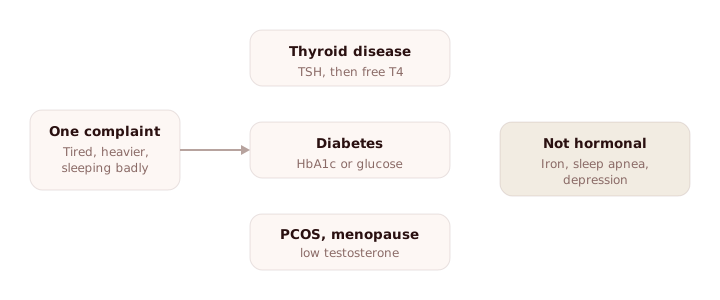
Read that definition closely and you can see why no test exists for it. It describes a direction of change in a quantity. It does not name the hormone, it does not name the direction, and it does not name the hour, and for hormones the hour matters as much as the number. A laboratory cannot run "hormone imbalance". It can run a thyroid panel, a morning testosterone, a prolactin, a cortisol at a defined time, or a glucose measurement, and each of those answers one question.
The phrase persists because the experience behind it is coherent. Several unrelated endocrine conditions really do produce the same handful of complaints. Cleveland Clinic's general symptom list reads: "Slow heartbeat or rapid heartbeat, unexplained weight gain or weight loss, fatigue, constipation, diarrhea, numbness and tingling in your hands, higher-than-normal blood cholesterol levels, depression or anxiety." Anyone living inside that list is right to want a name for it.
The risk is what fills the gap while the name is missing. An umbrella phrase with no test attached is commercially useful, which is how "adrenal fatigue" became a label with a supplement attached and no evidence behind it. The honest version of this page is to take the phrase apart rather than sell against it.
What do people mean when they say hormone imbalance?
In practice the phrase is doing one of three different jobs, and they are almost impossible to tell apart from the inside.
- A named condition that has not been tested for yet. Thyroid disease, PCOS and type 2 diabetes are common, and all three spend time undiagnosed while the person describes themselves as hormonally off.
- A symptom cluster where testing has already happened and found nothing. This is a genuinely difficult position, and it is not the same as being told nothing is wrong. It usually means the tests that were run answered their own questions correctly.
- A marketing category. The phrase is the entry point for supplement ranges and for large panels sold direct to the public, because a term with no definition can never be contradicted by a result.
What separates the first from the second is a test, chosen for a question, taken at the right time. That is the whole of it, and the rest of this page is about how that choice is made.
The conditions behind the phrase, and what separates them
These are the conditions "hormone imbalance" usually stands in for. The column that matters most is the last one, because it is the part a symptom list can never supply.
| Condition | What it is | Signs that point toward it | The test that answers it |
|---|---|---|---|
| Hypothyroidism | The thyroid makes too little thyroid hormone. NIDDK notes it is more common in women and in people older than 60. | NIDDK: fatigue, weight gain, trouble tolerating cold, joint and muscle pain, dry skin or thinning hair, heavy or irregular periods or fertility problems, slowed heart rate, depression. | TSH first, with free T4. NIDDK is explicit that diagnosis "can't be based on symptoms alone." |
| Hyperthyroidism | The thyroid makes too much. NIDDK names Graves' disease, an autoimmune disorder, as the most common cause. | NIDDK: weight loss despite an increased appetite, rapid or irregular heartbeat, nervousness, irritability, trouble sleeping, fatigue, shaky hands, muscle weakness, sweating or trouble tolerating heat, frequent bowel movements, goiter. | TSH first, then thyroid hormone levels and imaging. |
| Diabetes and prediabetes | Blood glucose regulation fails, in type 1 through loss of insulin production and in type 2 through resistance to it. | NIDDK: increased urination, feeling very thirsty, feeling very hungry even after eating, blurred vision, fatigue, sores that do not heal, frequent infections. Type 1 arrives "over a few days or weeks"; type 2 can develop over years with no symptoms at all. | Blood glucose testing. Symptoms are not required for the diagnosis and their absence does not exclude it. |
| PCOS | NICHD describes it as involving absent ovulation, high androgen levels, and growths in one or both ovaries. | NICHD: menstrual irregularities, infertility, hirsutism, severe or persistent acne, weight gain especially around the waist, oily skin, acanthosis nigricans. More than half have insulin resistance. | Cycle history, androgen levels and ovarian imaging, assessed together rather than from one number. |
| Perimenopause and menopause | A life stage, not a disease. MedlinePlus: "You have reached menopause when you have not had a period for 12 months." | MedlinePlus: changes in periods, hot flashes, trouble sleeping, vaginal dryness, mood changes, bladder problems. The transition "usually begins when you are in your 40s"; menopause most commonly falls between 45 and 55. | Defined by periods and symptoms rather than by a hormone value. A test is used to investigate what else might be going on. |
| Male hypogonadism | The testes produce too little testosterone, or the pituitary signal driving them is deficient. | StatPearls: "decreased spontaneous erections, decreased nocturnal penile tumescence, decreased libido, and reduced testicular volume." | StatPearls: "2 early morning (8 AM to 10 AM) serum testosterone measurements", with FSH, LH and prolactin added to the second draw. |
| Hyperprolactinemia | Prolactin runs high. StatPearls notes prolactinomas "account for up to 40% of pituitary adenomas", but drugs, hypothyroidism and chest wall injury also cause it. | Women: irregular or absent periods, infertility, and sometimes milk production, though StatPearls notes most women with high prolactin "may not have galactorrhea." Men: decreased libido, impotence, infertility, erectile dysfunction. Large tumours can cause visual field loss. | StatPearls: serum prolactin, "ideally with a fasting sample taken mid-morning", then pituitary MRI with contrast if it is high. |
| Cushing's syndrome | Too much cortisol for too long. NIDDK: the most common cause is "the long-term, high-dose use of the cortisol-like glucocorticoids." | NIDDK: weight gain with thin arms and legs, a round face, fat at the base of the neck and between the shoulders, easy bruising, wide purple stretch marks, weak muscles. Usually aged 30 to 50. | NIDDK: 24-hour urinary free cortisol, late-night salivary cortisol, or low-dose dexamethasone suppression, with two used to confirm. |
| Adrenal insufficiency | Too little cortisol. NIDDK: autoimmune disease causes "8 or 9 of every 10 cases of Addison's disease", while the most common cause overall is stopping long-term steroids suddenly. | NIDDK: chronic fatigue, muscle weakness, loss of appetite, weight loss, abdominal pain, nausea, vomiting, diarrhoea, blood pressure that drops on standing, salt craving, darkening skin in Addison's disease. | Blood tests, then CT or MRI to find the cause. Detail in how adrenal insufficiency is actually diagnosed. |
Two things fall out of that table. The first is how much overlap there is in the middle column and how little there is in the last one. The second is that four of these nine conditions are caused, or can be caused, by a medicine somebody is already taking. More on the whole group in our plain-language section on the cortisol conditions.
Hormone imbalance symptoms in women
Cleveland Clinic's list for female sex hormone imbalance runs: "Acne on your face, chest and/or upper back, hair loss, heavy periods, hirsutism (excess body hair), hot flashes, infertility, irregular periods, loss of interest in sex, vaginal atrophy, vaginal dryness." Several conditions produce overlapping parts of that list, and they are distinguished by different tests.
PCOS is the one most often behind irregular periods with acne and excess hair growth. NICHD reports that "More than one-half of women with PCOS have insulin resistance", that "About 25% to 45% of women with PCOS have metabolic syndrome", and that "More than one-half of women with PCOS will have either type 2 diabetes or prediabetes before their early 40s". That last figure is the reason a PCOS conversation is also a metabolic conversation rather than only a fertility one.
The menopausal transition accounts for hot flashes, disrupted sleep and mood change in midlife, and MedlinePlus is clear that it is defined by periods rather than by a hormone number. What makes it difficult is not that it is vague, it is that it is plausible, and a plausible explanation absorbs symptoms that belong elsewhere. We go through what the research actually measured in cortisol and perimenopause.
Thyroid disease produces fatigue, weight change, hair thinning and heavy or irregular periods, all of which are routinely attributed to the transition first. It is settled by a blood test in either direction.
High prolactin is worth naming because it is commonly missed. It causes irregular or absent periods and infertility, and StatPearls notes that most women with high prolactin may have no milk production at all, so the absence of that sign proves nothing. Its causes include several ordinary prescriptions.
Two things on that list are never to be attributed to hormones without assessment: bleeding after menopause, and persistent bloating with feeling full quickly. Both are in the urgent section above, and both are delayed most often by a reasonable-sounding hormonal explanation.
Hormone imbalance symptoms in men
This is the section the internet mostly does not write, which is why men arrive at hormone pages, recognise nothing, and leave. Cleveland Clinic's list for male sex hormone imbalance is "Decrease or loss of body hair, erectile dysfunction, gynecomastia (enlarged breast tissue), infertility, loss of interest in sex, loss of muscle mass."
Low testosterone is the usual first suspicion, and the testing rule is stricter than most people expect. StatPearls calls for "2 early morning (8 AM to 10 AM) serum testosterone measurements", and explains the timing plainly: "Morning levels are used because testosterone levels are typically the highest." It notes that "Two total testosterone levels <300 ng/dL are generally considered sufficient to diagnose biochemical but not clinical male hypogonadism", and recommends adding FSH, LH and prolactin to the second draw, because those results are what separate a testicular cause from a pituitary one. A single afternoon sample does not answer the question it was ordered for.
High prolactin belongs in the same conversation. StatPearls lists "decreased libido, impotence, infertility" and erectile dysfunction as its presentation in men, and its causes include dopamine-blocking medicines, antinausea drugs such as metoclopramide, primary hypothyroidism and chest wall injury. A man can have the whole low-testosterone symptom picture from a prescription written for something unrelated.
And the one most likely to be missed entirely: obstructive sleep apnea. NHLBI lists "Sexual dysfunction or decreased libido", "Daytime sleepiness and tiredness", "Dry mouth" and "Waking up often during the night to urinate" among its symptoms. A man reading a low-testosterone symptom list may be reading a sleep apnea symptom list, and the two are told apart by a sleep study rather than by a hormone panel. NHLBI notes that untreated sleep apnea "increases the risk for stroke, heart attack, and other serious problems", so this is not a lesser answer to end up with.
Cushing's syndrome and adrenal insufficiency are not women's conditions either. NIDDK's own figure, that Cushing's "affects about three times as many women as men", describes a condition where roughly a quarter of cases are male. If the features in the table above fit, the thing to do is ask, not assume the statistics have excused you. The symptom side is covered in the everyday signs people associate with high cortisol.
What is not a hormone problem
The most common outcome of a hormone investigation is that the cause is not a hormone. Four things account for a large share of it, and every one of them is treatable.
| Imitator | Why it gets mistaken for hormones | How it is told apart |
|---|---|---|
| Iron-deficiency anemia | NHLBI lists fatigue, dizziness or lightheadedness, cold hands and feet, and pale skin, with shortness of breath or chest pain in more severe cases. Heavy menstrual periods are a named cause, which puts it squarely in the same conversation as a cycle problem. | NHLBI: a blood test for complete blood count, hemoglobin, blood iron and ferritin. Because bleeding in the gastrointestinal tract is also a cause, the anemia itself sometimes needs investigating rather than only correcting. |
| Obstructive sleep apnea | NHLBI lists daytime sleepiness, fatigue, headache, insomnia, decreased libido and waking often to urinate. It reads like an exhaustive list of hormonal complaints. | A sleep study. NHLBI notes that fatigue, headache and insomnia are "more common in women" while loud snoring is "more common in men", so not snoring is not evidence against it. |
| Depression | NIMH lists fatigue and lack of energy, difficulty concentrating, sleeping too little or too much, appetite or weight changes, and physical aches without a clear physical cause. | NIMH requires symptoms "most of the day, nearly every day, for at least 2 weeks", and notes the confusion runs both ways: "Certain medications and medical conditions, such as viruses or thyroid disorders, can cause the same symptoms as depression." |
| Medications | Corticosteroids by any route can produce cortisol excess or, on withdrawal, deficiency. Dopamine-blocking drugs and antiemetics raise prolactin. Biotin does not change a hormone at all, it changes what the assay reports. | A full drug history, including inhalers, sprays, creams, drops, injections and supplements. This is the cheapest step in the whole process and the one most often skipped. |
None of these is a consolation prize. Iron deficiency, sleep apnea and depression all have real treatments and real consequences when left alone, and two of them raise cardiovascular risk. The reason to name them here is that a person who has decided their problem is hormonal will keep asking for hormone tests, and a hormone test does not look at any of this.
How do doctors actually test for a hormone imbalance?
They do not. They test one hormone to answer one question, and the time of day is part of the test rather than a detail around it. This is the single biggest difference between how clinical testing works and how a large panel is sold.
| The question | The first test | The timing rule | What can invalidate it |
|---|---|---|---|
| Is my thyroid under or over active? | TSH, with free T4 | No fixed hour. The American Thyroid Association calls TSH an "early warning system" because it moves before thyroid hormone does. | Biotin supplements, stopped 2 days before the draw. A pituitary problem can make TSH alone misleading. |
| Is my testosterone low? | Total testosterone, twice | Between 8 and 10 a.m., because that is when levels are highest. | One sample only, or an afternoon draw. StatPearls asks for two morning measurements before anything is concluded. |
| Is my prolactin high? | Serum prolactin | Fasting, mid-morning. | Macroprolactin, which StatPearls describes as large aggregates with "minimal or no biological activity". Dopamine-blocking drugs. The stress of the draw itself. |
| Is my cortisol too high? | 24-hour urinary free cortisol, late-night salivary cortisol, or low-dose dexamethasone suppression | The late-night sample has to be genuinely late at night. NIDDK says two of the three tests are used to confirm. | Estrogen-containing medicines, shift work, and a single result standing alone. |
| Is my cortisol too low? | Blood tests, then imaging to find the cause | Morning, when cortisol should be at its highest. | Steroid medicine by any route, which suppresses the axis being measured. |
| Is it diabetes? | Blood glucose testing | As directed, often fasting. | Nothing much. This is the most straightforward test on the list, which is part of why it belongs early. |
The pattern across that table is that a hormone result is a measurement plus a time, and separating the two destroys the meaning. That is most extreme for cortisol, which changes by the hour across a normal day, and it is why a cortisol reference range only makes sense next to the hour it was taken.
Why does a normal result not settle it?
Because "normal" is a statement about a population, not about you. A reference range covers "the middle 95% of the reference population", so by construction "5% of people in that same population will have results that fall outside the limits." Being slightly outside is common in healthy people. Being inside is not proof that the question was answered.
Three other things commonly leave a person with a normal result and an unresolved problem. The wrong hormone was tested, which is the usual outcome of guessing from symptoms. The right hormone was tested at the wrong hour, which for testosterone and cortisol changes the number substantially. And the test was run once where guidance asks for repetition, which is the explicit rule for male testosterone and for confirming cortisol excess.
Laboratories also differ. As the same reference-range source puts it, "Different laboratories use different kinds of equipment and different kinds of testing methods for analysis," so "A normal result in one lab may be abnormal in another." Comparing your value against a range found online, rather than the one printed beside it, is a reliable way to worry about nothing or to be reassured about something.
Cortisol is the extreme case of all of this, and we have written it up in detail in why a normal cortisol test does not close the question. None of that means a normal result should be dismissed. It means the right response to one is a more specific question, not a rejection of testing.
Is a home hormone test worth doing?
It can be a reasonable way to start a conversation. It is not a way to end one. The FDA's position on direct-to-consumer testing is worth reading in its own words: "In general, direct-to-consumer tests for non-medical, general wellness, or low risk medical purposes are not reviewed by the FDA before they are offered." It adds that these tests "are not a substitute for a traditional health care evaluation", that you should not "make any dietary or health-related decisions without first discussing your test results with your health care provider", and says plainly: "No test is 100% accurate."
The practical problems are the ones already covered: the hour the sample was taken, whether the range printed beside it belongs to that laboratory and that method, and whether one sample is enough for the question being asked. A large panel makes those problems worse rather than better, because the more analytes you measure, the more likely at least one lands outside its range by chance alone.
What a result can do is make an appointment more specific. Bringing a dated result, the method used and the range printed with it is more useful than bringing a feeling, and it is a legitimate reason to do one.
We should say where we sit in this, because we sell a sensor. The Auromone Curve measures cortisol continuously from a trace of sweat on the wrist. It measures no other hormone. It is a general wellness device: it does not detect, screen for, diagnose, rule out or manage any condition on this page, it does not replace any test described above, and it is not a fertility, contraception or pregnancy product. Nothing here is a reason to buy anything. It is a reason to ask a more specific question.
What to bring to an appointment
The quality of the answer depends heavily on the quality of the history, and most of that history is information only you have.
- Every medicine, by every route. Tablets, inhalers, nasal sprays, skin creams, eye drops, joint injections. Add anything stopped in the last year, particularly steroids.
- Every supplement, with doses. Name biotin specifically if you take it, including in a hair, skin and nails product, because of the 2-day rule before a thyroid draw.
- Any previous result, with its date, its hour, its units and the laboratory. A result without a time is much harder to use.
- A symptom timeline with dates. When it started, what changed, what has got worse. "About a year" is weaker evidence than "since February".
- Cycle dates if you have periods, including changes in length, heaviness and any bleeding between periods or after menopause.
- Photographs if your face, body shape or skin has changed. Appearance changes are hard to describe and easy to show.
- Whether you snore, gasp or stop breathing in your sleep, from whoever shares a room with you. This is the single most useful piece of information a partner can supply, and it is almost never volunteered.
Then ask three questions before you leave: which hormone are we testing and why that one; what time of day should the sample be taken; and what will a normal result rule out, and what will it not. The third question is the one that prevents a second year of guessing.
References
- Cleveland Clinic. Hormonal imbalance. (Source for the umbrella-term definition and the general, female and male symptom lists.)
- NIDDK. Hypothyroidism. (Symptoms, risk groups, and myxedema coma as a life-threatening extreme.)
- NIDDK. Hyperthyroidism (overactive thyroid). (Symptoms, Graves' disease, goiter.)
- NIDDK. Symptoms and causes of diabetes. (Symptom list, the speed of type 1 onset, and that many people with type 2 have no symptoms.)
- NIDDK. Cushing's syndrome. (Glucocorticoid medicine as the most common cause, the symptom list, three times as many women as men, and the three confirmatory tests.)
- NIDDK. Symptoms and causes of adrenal insufficiency and Addison's disease. (Symptom list, autoimmune cause in 8 or 9 of every 10 Addison's cases, and stopping corticosteroids as the most common cause overall.)
- NICHD. PCOS: symptoms. (Symptom list and the insulin resistance, metabolic syndrome and diabetes figures.)
- StatPearls. Male hypogonadism. (Two early morning 8 to 10 a.m. testosterone measurements, the 300 ng/dL figure, and adding FSH, LH and prolactin.)
- StatPearls. Hyperprolactinemia. (Causes including drugs and hypothyroidism, presentation in women and men, macroprolactin, and the fasting mid-morning sample.)
- StatPearls. Thyroid storm. (8 to 25% mortality, fever of 104 to 106 °F, heart rate over 140, triggers, and not waiting for lab results.)
- StatPearls. Pituitary apoplexy. (Sudden headache behind the eyes, medical and surgical emergency, ACTH deficiency in more than two-thirds, prompt corticosteroid replacement.)
- Endotext. Myxedema coma. (Hypothermia, altered mental status and a precipitating event as the defining features, mortality between 20% and 50%, and the precipitant list.)
- MedlinePlus. Diabetic ketoacidosis. (Symptoms, the emergency criteria, and DKA as sometimes the first sign of type 1 diabetes.)
- MedlinePlus. Preeclampsia. (Definition, the swelling and headache signs, the 48-hour postpartum window, and that many women do not feel sick.)
- MedlinePlus. Menopause. (The 12-month definition, the 45 to 55 age range, and the transition beginning in the 40s.)
- American Thyroid Association. Thyroid function tests. (TSH as the best initial test and an early warning system, secondary hypothyroidism, and stopping biotin 2 days before a draw.)
- NHLBI. Iron-deficiency anemia. (Symptoms, heavy menstrual bleeding and gastrointestinal bleeding as causes, and the blood tests used.)
- NHLBI. Sleep apnea symptoms and sleep apnea. (The symptom list, the sex differences in how it presents, the sleep study, and the stroke and heart attack risk.)
- NIMH. Depression. (Symptom list, the 2-week criterion, medical conditions causing the same symptoms, and the 988 guidance.)
- CDC. Ovarian cancer symptoms. (The symptom list and the 2-weeks-or-longer instruction.)
- National Cancer Institute. Endometrial cancer treatment (PDQ), patient version. (Vaginal bleeding after menopause, and bleeding or discharge not related to periods.)
- FDA. Direct-to-consumer tests. (Which tests are reviewed, that they are not a substitute for a health care evaluation, and that no test is fully accurate.)
- Testing.com. Reference ranges and what they mean. (The middle 95% of the reference population, the 5% who fall outside, and why ranges differ between laboratories.)