Read this first if you take steroids, or your face is changing
Never stop or reduce a steroid to get rid of moon face. After long-term use, stopping suddenly can cause an adrenal crisis, which is life-threatening. That applies whatever the route: tablets, inhalers and nasal sprays, skin creams, and injections, including joint injections. It also applies to some unlabelled arthritis remedies sold over the counter, which the FDA found contained hidden dexamethasone, a corticosteroid, warning that "suddenly stopping these drugs may be dangerous." If your face bothers you, tell the doctor who prescribed the steroid. Lowering the dose is their decision, made as a planned taper. Coming off steroids explains how that works.
Call emergency services for signs of an adrenal crisis in anyone who takes a steroid now, stopped one recently, or has adrenal insufficiency:
- Severe weakness, drowsiness or confusion
- Dizziness, fainting or collapse, from low blood pressure
- Nausea or vomiting, or signs of dehydration
- Pain in the abdomen, side or lower back
- Fever, or low blood sugar
It can look exactly like a stomach bug, and a stomach bug is its most common trigger. In published studies, gastroenteritis precipitates 35 to 45% of adrenal crises. If you are vomiting, you cannot rely on a steroid tablet, because you may not keep it down. The guidance for persistent vomiting is an injected steroid: use an emergency hydrocortisone injection if you have one, then call emergency services. Tell them you take a steroid, or have adrenal insufficiency, and may need hydrocortisone, and show a steroid emergency card if you carry one.
No fever does not rule it out. Fever is one of several possible signs, and one widely used clinical definition needs major ill health plus any two of them. A crisis can also be the first sign that someone's adrenal glands are not coping.
See a doctor soon, not as an emergency, if your face has grown rounder over weeks or months together with any of: easy bruising, a red, flushed face, weakness in the thighs or shoulders (trouble climbing stairs or straightening up), or reddish purple stretch marks wider than 1 cm. These are the features the Endocrine Society guideline says best separate Cushing's syndrome from its common look-alikes. High blood pressure or bone thinning that arrives younger than usual is another reason to ask.
Is "cortisol face" real?
Not as social media describes it. "Cortisol face" is not a medical term. It has no diagnostic criteria and no test, and the clinical literature does not use it. In the version that circulates online, ordinary stress raises cortisol and the cortisol puffs up and rounds your face. A supplement or a cortisol detox usually follows.
The trend borrows a real sign. Moon face, or moon facies, is a recognized change caused by glucocorticoids, the family of hormones cortisol belongs to. What the trend gets wrong is the dose. Moon face appears under sustained excess from steroid medicine or from disease. The Endocrine Society guideline lists physical stress, such as hospital stays, surgery and pain, among the states that raise cortisol but are "unlikely to have any clinical features of Cushing's syndrome." A demanding job is not in that territory.
There is no separate disease called "moon face syndrome" or "moon face disease" either. Moon face is a sign. When people search for the disease behind it, they almost always mean Cushing's syndrome, the name for sustained cortisol excess whatever its source, including medicine.
The three things that share the name look like this side by side:
| "Cortisol face" (social claim) | Moon facies from steroid medicine | Moon facies from endogenous Cushing's | |
|---|---|---|---|
| What it is | A label for a puffy or round face, blamed on stress | Fat redistributed to the cheeks, face and neck by prescribed glucocorticoids | The same redistribution, from cortisol the body overproduces |
| Cause | Everyday stress and "high cortisol" | Long-term steroids by any route, and some unlabelled remedies with hidden dexamethasone | Pituitary tumour 67%, adrenal cause 25%, ACTH-making tumour elsewhere 5% |
| How common | No data: not a recognized sign | Face or neck: 61% by 3 months and 69% by 12 months on prednisone at 20 mg a day or more | The disease is rare: 2 to 3 new cases per million a year. Moon facies in 36.9% of 130 patients in one registry |
| Exposure involved | Ordinary stress responses | Doses around ten times the body's own daily output, for months | Sustained excess that loses the normal night-time low |
| Signs that travel with it | None defined | Neuropsychiatric effects in 52.5% and skin changes in 46.2% at 3 months | Easy bruising, facial flushing, thigh and shoulder weakness, wide reddish purple stretch marks |
| How it is confirmed | It is not | The medication history, with the prescriber | Late-night saliva cortisol, 1 mg dexamethasone test or 24-hour urine cortisol, then an endocrinologist |
| Does it fade? | Sold as fixable with a supplement | Regressed in 71% during the taper or within 6 months of stopping | Expected to with treatment; no study we found times the face itself |
Sources: Endocrine Society guideline (Nieman 2008) for the stress, causes, incidence, signs and tests; Fardet 2007 (three reports) for steroid frequency, other side effects and regression; ESE and Endocrine Society 2024 guideline for the body's daily output; ERCUSYN (Valassi 2022) for the causes of endogenous disease; Rivera-Martínez 2026 for moon facies in Cushing's; Pituitary Society consensus 2021 for the night-time low; FDA for hidden dexamethasone. Full references below.
What is moon face, and what does a Cushing's face look like?
Moon face is a rounding of the face caused by fat redistribution, not by water. Under sustained glucocorticoid excess, fat builds up in the cheeks, the sides of the face and the lower face, and often at the base of the neck. Cleveland Clinic describes swelling on the sides of the face that makes it look "puffy and round, like a full moon."
A 2026 study from Peking Union Medical College Hospital measured the pattern directly. Researchers used 3D facial imaging to compare 42 people with Cushing's syndrome with 42 controls matched for age, sex and body mass index. The faces with Cushing's carried significantly more fat in the cheeks and lower face than the matched faces with ordinary obesity, in both width and depth. The distribution, not the weight, is what differs.
Clinicians call the full picture a cushingoid appearance. Alongside the round face it can include:
- Facial plethora: a red, flushed complexion. The Endocrine Society guideline lists it among the features that best discriminate Cushing's syndrome.
- Fat at the base of the neck, which NIDDK lists among the signs. The French steroid studies tracked fat at the back of the neck, the "buffalo hump", alongside the face.
- Easy bruising and reddish purple stretch marks wider than 1 cm, both on the guideline's discriminating list.
- Weakness in the thigh and shoulder muscles, which the Pituitary Society consensus describes as trouble climbing stairs and straightening up.
This is also why the face is a poor clue on its own. In the same guideline, "facial fullness" sits in the list of features that are common in the general population and less discriminatory. Plenty of people have full faces. What points toward Cushing's is a face that changes alongside the more specific signs above, and keeps changing.
Other causes of a rounder or puffier face
Cleveland Clinic also lists hypothyroidism, an underactive thyroid, as a cause of moon face. MedlinePlus includes a puffy face among its symptoms, with fatigue, weight gain, trouble tolerating cold, constipation, dry skin, and dry, thinning hair. It is diagnosed with blood tests and treated with thyroid hormone replacement, one more reason a changing face is a question for a doctor rather than for the mirror. Weight gain of any cause also fills out a face, and MedlinePlus lists obesity among the causes of facial swelling.
How common is moon face on steroids?
Common, at high doses taken for months. Steroid medicine is the most frequent cause of moon face, and of Cushing's syndrome overall. The Endocrine Society guideline states that "the most common cause is iatrogenic," meaning caused by prescribed corticosteroids.
The clearest measurement comes from a prospective study by Laurence Fardet and colleagues at two Paris hospitals, published in 2007. They followed 88 people starting long-term prednisone at 20 mg a day or more, with a mean starting dose of 56 mg a day, and assessed standardized photographs for fat redistribution in the face ("moon face") and at the back of the neck ("buffalo hump").
- By 3 months, 61% had developed it. By 12 months, 69%.
- Higher risk: women, people under 50, people with a higher starting body mass index, and people eating more than 30 kcal per kilogram of body weight a day.
- The most distressing side effect. In a report from the same study, fat redistribution was the most frequent clinical side effect at 3 months (63.0%) and the one patients found most distressing.
A second study from the same group followed 37 older adults treated for giant cell arteritis, with a mean starting dose of 44 mg a day. Fat redistribution appeared in 48% by 3 months and 60% by 12 months, at a median of 3 months after starting.
Why it takes doses like these. The 2024 joint guideline of the European Society of Endocrinology and the Endocrine Society puts the body's own cortisol production at about 9 to 10 mg a day, and gives 4 to 6 mg of prednisone as the physiological daily equivalent. The people in the French studies started on roughly ten times that. Moon face is what happens when glucocorticoid exposure stays far above what the body makes, for months.
The route does not protect you. The Cushing's guideline asks clinicians to check for steroids taken by mouth, inhaled, on the skin, injected or rectally before any testing, because all of them count. The FDA has also found undeclared dexamethasone in some "Artri" and "Ortiga" arthritis products sold over the counter, with reports of harms that included sudden weight gain. If you take an unlabelled joint remedy and your face has changed, bring the product to your doctor, and do not stop it abruptly. What causes high cortisol covers the other medical causes.
What is Cushing's syndrome, and how common is moon face in it?
Cushing's syndrome is the name for sustained cortisol excess, from any source. When the excess comes from steroid medicine, it is called exogenous or iatrogenic. When the body makes too much cortisol itself, it is endogenous, and that form is rare.
- How rare: European population studies found 2 to 3 new cases per million people a year, according to the Endocrine Society guideline. NIDDK estimates that 40 to 70 people in every million have it.
- Who: most often adults aged 30 to 50, and about three times as many women as men (NIDDK).
- Why: among 1,564 people in the European Registry on Cushing's Syndrome (ERCUSYN), 67% had a pituitary tumour driving the adrenal glands, known as Cushing's disease; 25% had an adrenal cause; and 5% had a tumour elsewhere making ACTH, the hormone that drives cortisol.
- How long it takes to find: the same registry recorded a delay of about 2 years between first symptoms and diagnosis, with several specialists consulted along the way.
Moon face is a classic sign, but not a universal one. How often it is recorded depends on who is looking and how. In a 2026 registry of 130 people with Cushing's syndrome at six hospitals in Antioquia, Colombia, weight gain was the most frequent presenting symptom (79.2%) and moon facies the most common physical sign (36.9%). In the larger European registry, the most frequent features were weight gain (83%), high blood pressure (79%), skin changes (76%) and muscle weakness (70%).
Two things follow. A round face without other features is weak evidence of Cushing's. And a person with Cushing's may not have a striking moon face, which is part of why diagnosis is slow. Why cortisol disorders are hard to diagnose goes into that.
Can stress or "high cortisol" give you moon face?
No, by the evidence. Three lines of it point the same way.
- The guideline says so for stress. The Endocrine Society's table of conditions that raise cortisol without Cushing's syndrome puts physical stress, such as hospital stays, surgery and pain, in the group "unlikely to have any clinical features of Cushing's syndrome."
- The doses do not match. Moon face was measured at prednisone doses around ten times the body's own daily output, kept up for months.
- Cushing's is a failure of control, not one high reading. The Pituitary Society consensus describes the screening tests as probing three things: loss of the normal late-night low in cortisol, failure of cortisol to fall when the body is given a strong steroid signal (dexamethasone), and raised cortisol across 24 hours. A body that rises to meet a stressful day and settles again at night is showing the control those tests look for.
The honest exception: non-neoplastic hypercortisolism
There is a real middle ground, and leaving it out would be its own myth. Some conditions raise cortisol for long enough to produce Cushing-like features without a tumour. Endocrinologists call this non-neoplastic hypercortisolism, formerly pseudo-Cushing's. James Findling and Hershel Raff, writing in the Journal of the Endocrine Society in 2023, list alcohol use disorder, neuropsychiatric disorders including major depression, chronic kidney disease, and poorly controlled diabetes among its causes, and note that its features "are often indistinguishable from true neoplastic Cushing syndrome." The Endocrine Society guideline adds pregnancy and severe obesity to the states where some features may be present.
The Pituitary Society consensus says the cortisol rise in these states tends to be mild, with 24-hour urine cortisol "almost always within 3-fold of normal," and that treating the underlying condition, such as depression, can restore normal cortisol. Findling and Raff report that alcohol-related features "resolve promptly after abstention from alcohol." None of this is a stressful job. It is a medical picture, and if heavy drinking is part of it, that belongs in the conversation with a doctor.
Does moon face go away after steroids are tapered?
Usually, but slowly, and as the dose comes down under supervision. The study that tracked this most closely is Fardet's follow-up of 37 people on prednisone for giant cell arteritis, photographed every month during treatment and every 3 months for 6 months after it ended.
| Fat redistribution on prednisone (37 people, giant cell arteritis) | Result |
|---|---|
| Developed it by 3 months | 48% |
| Developed it by 12 months | 60% |
| Median time to appear after starting | 3 months |
| Regressed during the taper or within 6 months of stopping | 71% |
| Median time from starting treatment to disappearance | 19 months |
| Median prednisone dose when it disappeared | 4 mg a day |
Fardet and colleagues, Revue de Médecine Interne, 2007. Mean starting dose 44 mg a day; mean follow-up 23.6 months.
Two details matter. The fat changes faded at a median dose of 4 mg a day, inside the 4 to 6 mg range the joint guideline gives as the physiological daily equivalent. And the 19 months is counted from the start of treatment, so most people lived with the change through a long stretch of their course. In the remaining 29%, it had not regressed within the study window. Cleveland Clinic notes that lowering the dose "may reduce the appearance of moon face over time," and is explicit: "Don't stop taking your medication without speaking with your provider."
Why the taper is not optional. The joint guideline treats steroid doses above the physiological equivalent, taken by mouth for 3 to 4 weeks or longer, as a risk for switching down the body's own cortisol production. Stopping suddenly after long-term use is a recognized cause of adrenal crisis (MedlinePlus). The signs are in the box at the top of this page, and what happens to your cortisol when you come off prednisone explains the recovery.
After Cushing's syndrome is treated
For endogenous Cushing's, Cleveland Clinic says moon face "should disappear as you go through treatment," without giving a timeframe, and we did not find a study that times the facial change on its own. The Pituitary Society consensus reports something broader: visceral, subcutaneous and total fat may decrease after remission, although most patients remain overweight or obese, and some effects of the disease can persist. Recovery runs on a long clock in other ways too. After pituitary surgery the body's own cortisol production needs time to restart, and NIDDK says people may be able to stop replacement cortisol in 6 to 18 months.
How is Cushing's syndrome actually diagnosed?
With repeated, specific tests ordered by a clinician, never from the face. The Endocrine Society clinical practice guideline (Nieman and colleagues, 2008) sets the order:
- Rule out steroid medicine first. A thorough drug history comes before any blood, urine or saliva test.
- Test the right people. Testing is recommended for people with features unusual for their age, such as early bone thinning or high blood pressure, or with multiple and progressive features, especially the most predictive ones.
- Start with one high-accuracy test from the table below. A longer, two-day low-dose dexamethasone test is the fourth option.
- Confirm with an endocrinologist. An abnormal result leads to a specialist and a second test. Agreeing normal results end the evaluation. Disagreeing results, suspected cyclic disease, or features that keep accumulating mean more testing.
| Test | What it checks | How it is done |
|---|---|---|
| Late-night salivary cortisol | Whether cortisol falls to its normal night-time low | Saliva collected at bedtime, at least twice; the 2021 consensus advises two or three. Not suitable for night-shift workers |
| 1 mg overnight dexamethasone suppression test | Whether cortisol falls when the body is given a strong steroid signal | 1 mg dexamethasone between 11 p.m. and midnight, blood cortisol at 8 a.m. Above 1.8 µg/dL (50 nmol/L) is abnormal. Oral estrogen can cause false positives |
| 24-hour urine free cortisol | How much cortisol the body produces across a whole day | At least two complete 24-hour collections, because results can vary by as much as 50% between them |
Tests and the 1.8 µg/dL cutoff: Endocrine Society guideline (Nieman 2008). Number of samples, night-shift and estrogen caveats, and the 50% variability: Pituitary Society consensus (Fleseriu 2021).
The 2021 Pituitary Society consensus puts the sensitivity of each test above 90% in this setting. That is high, not perfect, and Cushing's can be cyclic, with weeks to months of normal cortisol between episodes of excess. So one normal result does not always close the question when symptoms keep building. Can you have Cushing's with a normal cortisol test? explains when doctors repeat testing.
A doctor's job, not a mirror's or a wearable's
Moon face, Cushing's syndrome and hypothyroidism are diagnosed by clinicians with the tests above. No symptom list, mirror, app, at-home kit or wearable, ours included, can diagnose or rule out any of them. Nothing on this page is a diagnosis.
Why is my face puffy in the morning?
First, the swelling that cannot wait
Call emergency services if facial swelling comes with any of:
- Swelling of the lips, tongue, mouth or throat
- Difficulty breathing or swallowing, or a change in your voice
- Swelling that is sudden and getting rapidly worse
That can be an allergic reaction or angioedema, and the airway comes first. Angioedema can also be caused by ACE-inhibitor blood-pressure drugs, and the Merck Manual notes it "may occur soon or years after therapy begins," so a drug you have taken for years is not ruled out.
See a doctor the same day if the swelling is sudden, painful or severe, on one side only, or comes with fever, tenderness or redness, which MedlinePlus says suggests infection, such as cellulitis or a tooth abscess. Also the same day if it comes with foamy urine or swollen legs or ankles, which can point to the kidneys, or if your face, neck and arms are swelling together, which can be a sign of a blocked large vein in the chest.
If you are pregnant or have recently given birth, swelling of the hands and face or around the eyes can be a sign of preeclampsia, which MedlinePlus notes can appear during pregnancy or after delivery. Contact your maternity care provider the same day, and do not let this page or any other reassure you.
With those set aside, the most common reason for morning puffiness is that you were lying down. Medical News Today puts it plainly: "Lying down causes fluid to collect in a person's face," and it usually fades once you are upright. That is fluid, not fat, which is the real difference from moon face. The things that make it more pronounced are mundane:
| What commonly puffs a face | Why |
|---|---|
| Sleeping flat | Fluid collects in the face overnight and drains once you are upright |
| Salt | A high-sodium meal makes the body hold on to more water |
| Alcohol | It makes you urinate more, which can lead to mild dehydration and water retention. Heavy, long-term drinking is a different matter: it can raise cortisol itself (see above) |
| Allergies and sinus infection | Dust mites, pollen and sinus inflammation can all puff a face. If the lips, tongue or throat swell, or breathing is affected, treat it as an emergency |
| The menstrual cycle | Fluid retention is common around menstruation. Pregnancy is not on this list, because facial swelling in pregnancy needs a clinician, not a table |
Source for the table: Medical News Today, which also advises immediate care for fever, swelling in the mouth or airways, or difficulty breathing.
Why we will not give you a "when to relax" rule
The tidy line would be that swelling which arrives overnight and fades by mid-morning is nothing to worry about. We will not write that, because it is not safe. In superior vena cava syndrome, a blocked large vein in the chest that Cleveland Clinic says is malignant in about 7 in 10 cases, most often from lung cancer, swelling of the face is often the earliest sign and can get worse when you lie flat. In nephrotic syndrome, a kidney condition, the NHS says swelling is usually first noticed around the eyes. Both can look like ordinary morning puffiness to the person in the mirror.
So the honest rule is about action, not reassurance: a face that swells day after day, changes over weeks or months, or comes with any of the signs above is a question for a doctor.
What does everyday stress do to your face, then?
Indirectly, and modestly. Stress does not move fat into your cheeks. What a hard stretch can do is push on the things in the table above: shorter nights, more alcohol, saltier convenience food. The face at the end of a bad month is usually the sum of those, and each of them is real. It is not the mechanism the trend sells, and a supplement does not reverse it; what cortisol supplements actually do covers that claim.
Stress does have a real cortisol story, and it is about timing rather than appearance. Cortisol follows a daily rhythm: it rises sharply after waking and falls to its lowest around sleep onset. That rhythm is tied to sleep, which is covered in cortisol and sleep. The companion myth about the waistline gets the same treatment in cortisol belly.
Why can't a mirror, or one cortisol test, show what your cortisol is doing?
Because the face is a weak signal and cortisol is a moving one. Facial fullness is common in people with no cortisol problem at all, which is why the guideline treats it as non-specific. And a single cortisol number is one moment of a rhythm that climbs in the morning and bottoms out at night. A sample taken at 8 a.m. and one taken at bedtime describe different parts of the same day, and neither describes the shape of it.
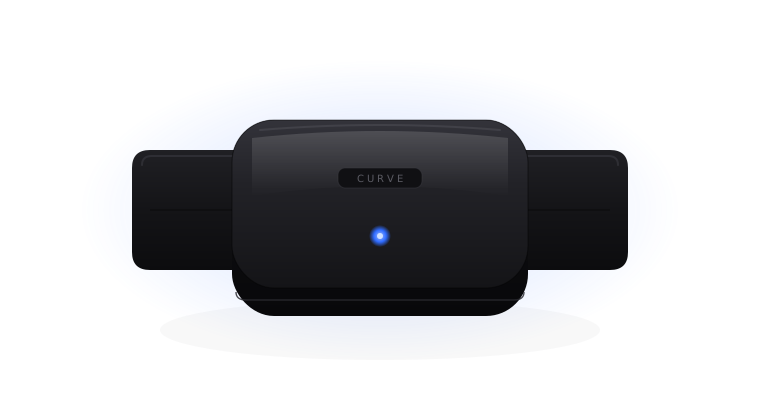
If what you want is to see how your own cortisol moves through ordinary days, that is a different question from the medical one above. At-home cortisol tests compares saliva and blood-spot kits, which capture a few points in a day. The Auromone Curve is designed to read cortisol from a trace of sweat on the wrist through the day and night, so you can see your own rhythm against your own baseline. It is a general wellness device in development. It does not detect, screen for or diagnose any of the conditions on this page, and it does not replace clinical testing. We publish no accuracy figure; how a cortisol wearable is validated sets out how it will be tested.
What to take from this
- "Cortisol face" is a label, not a diagnosis. Everyday stress does not cause moon face.
- Moon face is real. It is fat redistributed to the cheeks and lower face under sustained glucocorticoid excess, and steroid medicine is the most common cause.
- On high-dose prednisone it is common, and it usually fades. Face or neck fat changes appeared in 61% within 3 months in one study, and regressed in most people during a supervised taper, over many months.
- Never stop or cut a steroid on your own. An adrenal crisis can look like a stomach bug, with or without a fever.
- A face that rounds over weeks or months alongside bruising, flushing, weakness or wide purple stretch marks needs a doctor and proper testing, not a mirror or a wearable.
References
- Nieman LK, Biller BM, Findling JW, et al. The diagnosis of Cushing's syndrome: an Endocrine Society clinical practice guideline. Journal of Clinical Endocrinology and Metabolism. 2008;93(5):1526-1540. (Iatrogenic steroids as the most common cause; incidence of 2 to 3 per million a year; routes to check; discriminating and non-discriminating features, including facial fullness; physical stress unlikely to cause features; the initial tests and the 1.8 µg/dL cutoff; who to test.)
- Fleseriu M, Auchus R, Bancos I, et al. Consensus on diagnosis and management of Cushing's disease: a guideline update. Lancet Diabetes and Endocrinology. 2021;9(12):847-875. (What each test probes; sensitivity above 90%; two or three samples; night-shift and estrogen caveats; urine variability up to 50%; cyclic disease; pseudo-Cushing's within 3-fold of normal; fat after remission; stair-climbing weakness; night-time low tied to sleep onset.)
- Fardet L, Cabane J, Lebbé C, Morel P, Flahault A. Incidence and risk factors for corticosteroid-induced lipodystrophy: a prospective study. Journal of the American Academy of Dermatology. 2007;57(4):604-609. (88 patients at 20 mg a day or more; 61% at 3 months and 69% at 12 months; risk factors.)
- Fardet L, Flahault A, Kettaneh A, et al. Corticosteroid-induced clinical adverse events: frequency, risk factors and patient's opinion. British Journal of Dermatology. 2007;157(1):142-148. (Lipodystrophy 63.0% and most distressing; neuropsychiatric 52.5%; skin 46.2%.)
- Fardet L, Flahault A, Kettaneh A, et al. Natural history of corticosteroid-induced lipodystrophy: a prospective follow-up of 37 patients (in French, English abstract). Revue de Médecine Interne. 2007;28(12):825-831. (Onset, regression in 71%, median 19 months to disappearance at 4 mg a day.)
- Beuschlein F, Else T, Bancos I, et al. European Society of Endocrinology and Endocrine Society joint clinical guideline: diagnosis and therapy of glucocorticoid-induced adrenal insufficiency. European Journal of Endocrinology. 2024;190(5):G25-G51. (Body's own output about 9 to 10 mg a day, equivalent to 4 to 6 mg prednisone; suppression risk from 3 to 4 weeks.)
- Findling JW, Raff H. Recognition of nonneoplastic hypercortisolism in the evaluation of patients with Cushing syndrome. Journal of the Endocrine Society. 2023;7(8):bvad087. (Causes; features often indistinguishable; alcohol-related features resolve after abstention.)
- Valassi E. Clinical presentation and etiology of Cushing's syndrome: data from ERCUSYN. Journal of Neuroendocrinology. 2022;34(8):e13114. (1,564 patients; causes; most frequent features; 2-year diagnostic delay.)
- Rivera-Martínez WA, Ramírez Castaño MJ, Cruz Calderón S, et al. Clinical characteristics, diagnosis, and treatment of Cushing's syndrome: analysis of a multicenter registry in Antioquia, Colombia. Therapeutic Advances in Endocrinology and Metabolism. 2026;17. (130 patients; weight gain 79.2%; moon facies 36.9%.)
- Qiang J, Liu R, Lu L, et al. The face of excess cortisol: clinical and morphologic insights into Cushing syndrome. Endocrine Practice. 2026;32(3):318-328. (3D imaging of 42 patients and 42 matched controls; fat in the cheeks and lower face.)
- NIDDK, National Institutes of Health. Cushing's syndrome. (40 to 70 per million; age and sex; fat at the base of the neck; 6 to 18 months after pituitary surgery.)
- Cleveland Clinic. Moon face: causes and treatment. Last updated June 2024. (Definition; hypothyroidism; dose reduction; never stop without your provider.)
- MedlinePlus, U.S. National Library of Medicine. Acute adrenal crisis. (Sudden stopping of long-term glucocorticoids as a cause; symptoms; go to the emergency room.)
- Dineen R, Thompson CJ, Sherlock M. Adrenal crisis: prevention and management in adult patients. Therapeutic Advances in Endocrinology and Metabolism. 2019;10. (Gastroenteritis in 35 to 45% of crises; definitions needing two signs; can be the first presentation; injection for persistent vomiting; emergency card.)
- U.S. Food and Drug Administration. FDA warns consumers not to purchase or use Artri and Ortiga products, which may contain hidden drug ingredients. 2022, updated 2023. (Undeclared dexamethasone; sudden weight gain among reported harms; danger of stopping suddenly.)
- MedlinePlus. Hypothyroidism. (Puffy face and other symptoms; blood tests; treatment.)
- MedlinePlus. Face swelling. (Causes including obesity and glucocorticoids; when to seek care: sudden, painful or severe swelling, difficulty breathing, fever, tenderness or redness.)
- Merck Manual, Professional Edition. Angioedema. (ACE-inhibitor angioedema soon or years after starting; the airway first.)
- MedlinePlus. Preeclampsia. (Swelling of the hands and face or around the eyes; during pregnancy or after delivery.)
- Cleveland Clinic. Superior vena cava syndrome. (Facial swelling often the earliest sign, worse lying flat; about 7 in 10 cases malignant; lung cancer most common.)
- NIDDK. Nephrotic syndrome in adults, and NHS. Nephrotic syndrome. (Puffy eyelids, foamy urine, swollen legs; swelling usually first noticed around the eyes.)
- Medical News Today. Puffy face in the morning: causes, treatments, and prevention. (Lying down, salt, alcohol, menstruation, allergies, sinus infection; when to get immediate care.)
This page is for general education and is not medical advice. The Auromone Curve is designed as a general wellness device, not a diagnostic, and does not replace clinical testing. It is in development and not yet on sale. Persistent changes to your face deserve a proper medical assessment.