Cortisol is the stress hormone
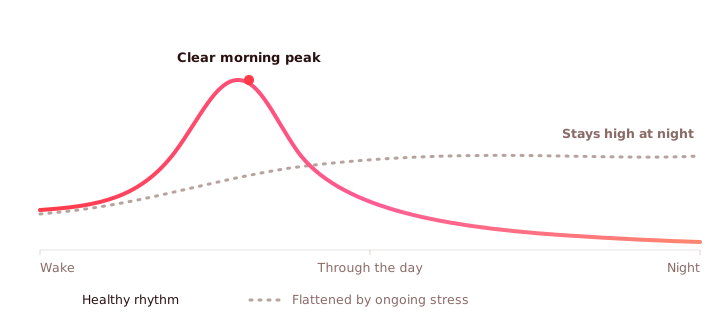
When you hit a stressor, a tight deadline, a hard workout, a rough night, your brain signals your adrenal glands to release cortisol. Cortisol is not the only hormone in that response, and the stress hormones covers the faster wave of adrenaline and noradrenaline that arrives first. It's the hormone that mobilizes energy and sharpens focus so you can respond. That part is healthy and useful. Cortisol also follows a daily rhythm, high in the morning and low at night, so "good" cortisol is really about the right amount at the right time.
Short-term stress vs ongoing stress
A brief spike of cortisol during a stressful moment is normal. It rises, you handle the thing, it settles. The problem is ongoing stress, where cortisol doesn't get the chance to come back down. Stress is only one of the things that raise it, too; here is what causes high cortisol more broadly.
With chronic stress, the daily rhythm can flatten or shift: cortisol that stays high in the evening, or barely rises in the morning. You can't feel that shift directly. It usually shows up as the downstream stuff, restless sleep, afternoon crashes, or the sense that you never fully recharge.
A "stress score" is not the hormone
This is the key distinction. The Oura Ring, Whoop, the Apple Watch, and Garmin all estimate stress from heart-rate variability. That's a stand-in for your nervous system, and it's a real signal, but it isn't cortisol. It's a bit like guessing the temperature from how people are dressed instead of reading a thermometer. Each company publishes what its own number is built from, and wearable stress tracking sets those descriptions side by side.
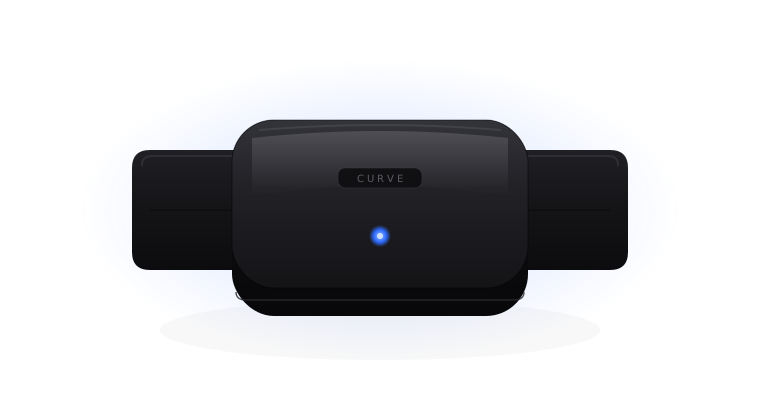
The Auromone Curve reads the cortisol molecule itself, so "stress" stops being a derived score and becomes the actual hormone you can watch rise and fall. For the full comparison, see how cortisol measurement methods compare.
How to track your stress hormone
At-home saliva or blood-spot kits can measure cortisol, but only in a few timed samples you wait on a lab for. To actually connect stress to your day, you need the pattern. The Auromone Curve reads cortisol from a trace of sweat continuously, so you can see how a stressful afternoon, a workout, or a good night's sleep changes your hormone, and whether your own daily pattern shifts when you change a habit.
New to cortisol? Start with Cortisol 101, then see how it connects to sleep.
The HPA axis, in plain English
When something stresses you, cortisol doesn't just appear. It's the end of a short relay called the HPA axis, short for hypothalamic–pituitary–adrenal:
- A part of your brain, the hypothalamus, senses the stressor and sends a signal.
- The pituitary gland passes that signal along as a hormone messenger.
- Your adrenal glands, which sit on top of your kidneys, release cortisol into the blood.
- Cortisol mobilizes energy and focus, then signals back to switch the loop off.
That feedback step is the important one. In a healthy system, cortisol rises to meet a challenge and then the loop shuts itself down. Ongoing stress is, in part, a feedback loop that never fully gets the "all clear."
Short-term vs chronic stress, side by side
| Short-term stress | Chronic stress | |
|---|---|---|
| Duration | Minutes to hours | Weeks, months, or longer |
| What cortisol does | Rises within about 15–30 minutes, then settles | Stays up at the wrong times, or the rhythm flattens |
| How it feels | Alert, energized, then back to baseline | Wired-but-tired, restless sleep, energy crashes |
| What helps | Handling the thing; the response ends on its own | Steady habits over time, and seeing whether they work |
The short version is healthy; it's what cortisol is for. The concern is the right-hand column. When the daily rhythm flattens, it isn't just uncomfortable: a flatter day-to-night cortisol slope has been linked to poorer health across a large body of research (Adam and colleagues, 2017). The shape of your day matters.
Why a heart-rate "stress score" isn't cortisol
It's worth being blunt about this, because it's the single most common mix-up. A "stress score" on a ring or watch is built from heart-rate variability, the way your heartbeats space out. That reflects your nervous system in the moment, and it's a genuinely useful signal. But it's a downstream echo, not the hormone.
Cortisol and heart rate can move together, and they can also disagree: a calm heart rate with cortisol quietly elevated, or the reverse. If you want to know what your stress hormone is actually doing, you have to read the hormone. That's the whole point of the Curve.
This guide is for general wellness education only. The Auromone Curve is a general wellness device, not a diagnostic, and does not replace medical advice.
References
- StatPearls (NCBI Bookshelf). Physiology, Stress Reaction.
- Endocrine Society. Adrenal Hormones.
- StatPearls (NCBI Bookshelf). Physiology, Cortisol.