Home/Auromone Health/Cortisol 101

Cortisol 101

Cortisol, and how you can finally see it.

Cortisol is the hormone behind your energy, sleep, and stress. For most people it has only ever been a number you glimpse in a lab. This is a plain-English guide to what cortisol is, the daily cortisol curve, and how to measure cortisol, from blood and saliva tests to all-day wearable monitoring on the wrist.

The short answer

Cortisol is your body's main stress hormone, made by the adrenal glands on a daily rhythm — highest within an hour of waking, lowest overnight. It is measured in blood, saliva, or urine at a lab, or continuously on the wrist with a wearable. A wearable shows the daily pattern; it is a general wellness tool, not a diagnostic test.

What is cortisol?

Cortisol is your body's main stress hormone, made by your adrenal glands. It helps set your energy, sleep, metabolism, blood sugar, immune response, and how you react to stress. Almost every system in your body responds to cortisol, which is why its pattern matters so much.

The cortisol curve (your daily rhythm)

Cortisol isn't one fixed level. It follows a daily rhythm (some call it the diurnal curve):

Because cortisol is a pattern, not a point, the useful question is rarely "is it high?" but "is it rising and falling at the right times?" A level that looks fine at 8 AM can look very different at 10 PM. That is exactly what a single test can miss.
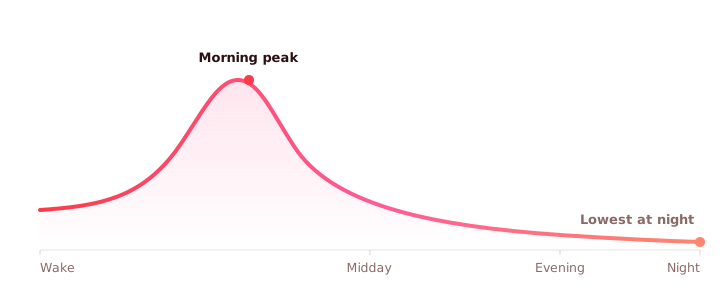
A healthy daily cortisol curve rising to a morning peak then falling to a low at night.
A healthy daily rhythm: a sharp rise after waking, a morning peak, and a steady drop to its lowest at night.

Cortisol, sleep, energy & stress

A healthy cortisol rhythm is part of feeling rested in the morning and winding down at night. When the rhythm flattens or shifts, say from ongoing stress, poor sleep, or night-shift schedules, people often notice it as restless sleep, afternoon energy crashes, or a sense that the battery never fully recharges. Seeing the rhythm is the first step to knowing whether the changes you make (sleep, exercise, light, recovery) are actually moving it.

How is cortisol measured?

There are four common ways to measure cortisol today:

The first three each give you a snapshot or two. Only all-day monitoring shows the full daily pattern. For a detailed side-by-side, see how cortisol measurement methods compare.

Can a wearable measure cortisol?

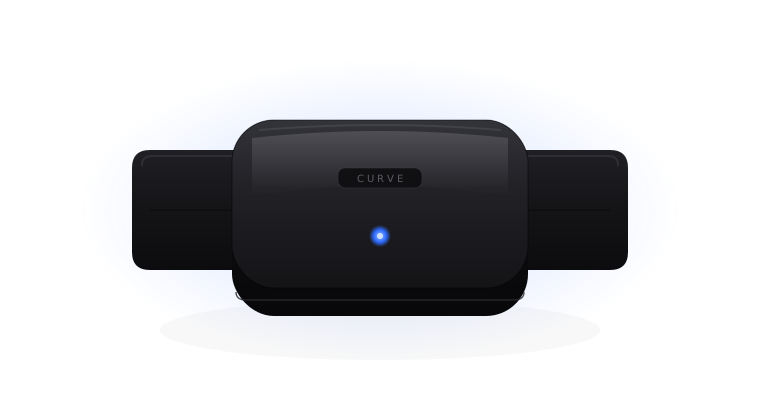
Most wearables cannot. The Apple Watch, Oura Ring, Whoop, and Garmin guess at "stress" from your heart rate, which is only a stand-in, not the hormone. The Auromone Curve reads cortisol itself, straight from the trace of sweat on your wrist, about 720 readings a day, using a small swappable sensor. It's the same idea as a glucose monitor, but for cortisol.

How to track your cortisol at home

If you want a few timed readings, an at-home saliva kit works. If you want to see the whole pattern, how cortisol climbs and comes back down across real days, a continuous wearable is the only practical way to do it without repeated lab visits. The Auromone Curve reads all day, shows your day in a companion app, and lets you see how sleep, training, and stress change your rhythm over weeks.

This guide is for general wellness education only. The Auromone Curve is a general wellness device, not a diagnostic, and does not replace medical advice. Always consult a healthcare provider about your health.

References

Go deeper

Cortisol guides

Cortisol and sleepHow the daily rhythm runs your nights, and why you wake at 3 a.m. The cortisol awakening responseYour body's morning alarm, and what a healthy one looks like. Cortisol and stressWhy a "stress score" isn't the same as the actual hormone. How to lower cortisolWhat actually helps, and how to tell if it's working. Signs of high cortisolWhat people notice, and how to get real data. At-home cortisol testSaliva and blood-spot kits vs all-day wearable monitoring. Normal cortisol levelsTypical ranges, the chart, and why the pattern beats the number. Does your watch measure cortisol?Apple Watch, Whoop, Oura and Garmin, checked. Cortisol and weightThe belly-fat connection, honestly explained. Cortisol supplementsAshwagandha, magnesium and more, what the evidence says. Cortisol and perimenopauseWhat actually changes, and what gets missed. Cortisol faceIs it real? What the science actually says. Adrenal fatigueWhy it isn't a diagnosis, and what the research actually found. Coming off steroidsWhat a taper does to your cortisol, and the warning signs. Low cortisolAdrenal insufficiency, and how it differs from "adrenal fatigue". Best time to test cortisolWhy the hour you test is part of the result. Why do I wake up at 3am?The causes worth checking, and the ones that are emergencies. What moves your cortisolCaffeine, alcohol, sleep and exercise, by the numbers. What causes high cortisolFrom stress and sleep to the medical causes. Cortisol bellyDoes stress decide where fat goes? What is real, and what is not. Cortisol and anxietyWhy you cannot read anxiety off a cortisol curve. Cortisol detoxDoes the cortisol cocktail work? The evidence, and a real risk. Cortisol test costBlood, saliva, urine and hair, priced and compared. Cortisol vs HRVWhy a stress score is not a hormone level. Night shift and cortisolWhat happens to your rhythm when you work nights. Cortisol and overtrainingWhat athletes measure, and what no marker can tell you.Cortisol for athletesHow continuous cortisol fits next to a recovery score.Cortisol for biohackersBaseline first, then run the protocol against your own curve.Cortisol rhythmWhy one timed test shows a single point on a daily curve. Does cold plunging lower cortisol?What the studies actually found. Auromone vs ELI HealthSweat vs saliva, continuous vs timed, side by side. Cushing's with a normal test?Why one normal cortisol result does not rule it out. HPA axis dysfunctionThe real science behind the "adrenal fatigue" idea. Why cortisol disorders are hard to diagnoseWhat makes Cushing's and adrenal insufficiency take years.
Common questions

Cortisol, answered

What is cortisol?

Cortisol is your body's main stress hormone, made by your adrenal glands. It sets your energy, sleep, metabolism, and how you handle stress, and follows a daily rhythm. It rises in the morning and falls to its lowest at night.

Can a smartwatch or wearable measure cortisol?

Most can't. The Apple Watch, Oura, Whoop, and Garmin guess at stress from your heart rate, not the hormone. The Auromone Curve reads cortisol directly from sweat, about 720 readings a day.

How can I measure my cortisol at home?

At-home saliva or blood-spot kits give you a few timed snapshots you mail to a lab. A continuous wearable like the Auromone Curve reads cortisol from the sweat on your wrist all day and night, showing the whole pattern.

What is the cortisol curve or diurnal rhythm?

It's cortisol's natural daily pattern: a sharp rise after you wake, a high point in the morning, and a slow drop to a nighttime low. Because cortisol is a pattern, all-day monitoring shows what a single test can miss.

Is there a continuous cortisol monitor?

Yes. The Auromone Curve. It reads cortisol from a trace of sweat about 720 times a day using a small swappable sensor that lasts 14 days, much like the glucose monitors people with diabetes use. It's a general wellness device and does not diagnose.

Make your cortisol visible.

The Auromone Curve reads your cortisol all day, from your wrist. It ships Q4 2026, and joining the waitlist is free.

Join the waitlist