Is a growing belly always fat?
No. Read this before the biology: the things that get filed as weight gain.
Fat is not the only thing that makes an abdomen bigger. Fluid does it. A tumour does it. Both are routinely written off as weight gain, by patients and sometimes by clinicians, and that misfiling is what makes them dangerous. This box takes a minute.
Go to an emergency department if a swollen abdomen comes with:
- Fever
- Intense abdominal pain, or chest pain
- Shortness of breath, or severe trouble breathing
- New confusion, drowsiness or a change in alertness
- Vomiting blood, or bleeding from the rectum
- Vomiting more than once a day
Cleveland Clinic names fever and intense stomach pain as reasons to go to the emergency room in someone with ascites, which is fluid collecting in the abdomen. MedlinePlus lists abdominal or chest pain, fever, confusion or a change in alertness, vomiting blood, rectal bleeding, repeated vomiting and shortness of breath as reasons to get emergency help in cirrhosis, the most common cause of ascites. Infection of that fluid, called spontaneous bacterial peritonitis, is one of the dangers, and it does not reliably announce itself. The Merck Manual notes it can show up as confusion or as unexplained deterioration, and that the tenderness you would expect can be blunted by the fluid itself. So the absence of fever and the absence of severe pain rule nothing out. If your abdomen is swollen and you feel unwell in a way you cannot name, go.
See a doctor within days, not months, if any of these describe you:
- Your abdomen is swelling quickly, you are gaining weight fast, you are short of breath, or your ankles and legs are swelling too. Cleveland Clinic advises people with cirrhosis to contact a provider for a gain of more than 2 pounds a day for 3 days in a row, a growing belly, or shortness of breath. That speed is fluid, not fat. Ascites is most often caused by cirrhosis of the liver, and also by heart failure, kidney failure and cancer in the abdomen or pelvis. Yellowing of the skin or eyes alongside any of this points at the liver. A swelling belly with swelling ankles and breathlessness, especially at rest or waking you at night, is the picture of heart failure. Cleveland Clinic says to call 911 or go to the emergency room for severe trouble breathing, new chest pain, or heart failure symptoms that suddenly get much worse. Note that this is the opposite limb pattern to Cushing's below: fluid puffs the legs up, cortisol thins them down. Either one matters. You cannot diet fluid off, and trying is how months get lost.
- You are bloated or your tummy is swollen often, you feel full soon after starting a meal, you have pain in your tummy or pelvis, or you suddenly need to pee more often or more urgently. The NHS lists exactly these four as the main symptoms of ovarian cancer, and describes them as happening frequently, roughly 12 or more times a month. Do not use that number as a threshold. The NHS's own instruction is to see a GP if you have any symptom of ovarian cancer. NICE adds triggers the frequency rule hides: being 50 or over raises the concern, unexplained weight loss, fatigue or a change in bowel habit can prompt testing, and IBS-like symptoms that start at 50 or over should themselves prompt ovarian cancer tests, because IBS rarely appears for the first time at that age. These symptoms are vague and ordinary, which is part of why 54% of ovarian cancers in the United States are still found only after the cancer has spread to distant sites. Five-year relative survival is 91.9% when it is caught while still localized and 31.5% once it is distant (SEER, 2016 to 2022 data).
- Fat is collecting around your middle while your arms and legs get thinner. That, plus wide purple stretch marks, skin that bruises easily, or trouble standing up from a chair without pushing with your hands, is the picture of Cushing's syndrome. The Endocrine Society's diagnostic guideline lists easy bruising, facial plethora (a face that stays red and full, not episodic flushing), proximal muscle weakness and striae, especially if reddish-purple and wider than 1 cm, as the features that best discriminate it. Its most common cause, per NIDDK, is long-term, high-dose glucocorticoid (steroid) medication. If you take steroids by any route, including inhaled, topical, nasal or injected, this paragraph is about you. Never stop or reduce a prescribed steroid on your own; read what happens when you come off steroids first.
None of these are things you diagnose from a mirror or an app, and none of them are things a wearable can find, including ours. They are things you take to a doctor, and the tests are ordinary: an examination, blood work, imaging. For suspected ovarian cancer, NICE guidance (updated in 2026) routes people aged 40 or over through a CA125 blood test and, depending on age and the result, an urgent ultrasound scan of the abdomen and pelvis; under 40, it advises considering the ultrasound directly rather than relying on CA125. Ask for them by name if you need to. NICE also says that if a doctor finds ascites, or a mass in the pelvis or abdomen, on examination, that alone triggers a suspected-cancer referral, so "I can feel something" is worth saying out loud.
What the absence of these signs does not rule out
Every red flag above is useful as a positive. None of them is a screening test, and it would be dangerous to read them as one.
- Slow does not mean safe. Ovarian cancer symptoms are often gradual and unremarkable, which is why more than half of cases are already advanced at diagnosis. A belly that has grown quietly over a year is not thereby explained.
- A belly that comes and goes is not cleared either. One study (Bankhead and colleagues, BJOG, 2008) found persistent abdominal distension in 38 of the 44 women who had ovarian cancer, with an adjusted odds ratio of 5.2, while bloating that fluctuated showed no significant association. That is a useful distinction for a clinician. It is not a permission slip: 6 of those 44 women did not have persistent distension, and the NHS advice is that if you have seen a doctor and the symptoms have not gone away, are worse, or are more frequent, you go back.
- Thin limbs are a late sign, not an entry requirement. Cushing's syndrome can look like plain weight gain before it looks like anything textbook. The Endocrine Society recommends testing people with multiple and progressive features, not waiting for one dramatic one.
- Not drinking does not protect your liver. NIDDK estimates about 24% of US adults have fatty liver disease that is not caused by heavy alcohol use (NAFLD, also called MASLD), and its inflammatory form can lead to cirrhosis, the leading cause of ascites.
- Being slim does not exclude any of this. A growing abdomen in someone who is not otherwise gaining weight is more concerning, not less.
- This page is not only for women. Ovarian cancer needs ovaries, including after a hysterectomy that left them in place, and NICE's guidance names trans men and non-binary people with ovaries explicitly. Ascites, liver disease, heart failure and Cushing's syndrome do not care about your sex.
We are not going to give you a rule for when your belly is fine. There is a version of this article that offers one, and it would be the most-shared paragraph on the page. It would also be the one that keeps somebody home.
Is "cortisol belly" real?
The label is not real. Part of the biology under it is. The American Association of Clinical Endocrinology (AACE) describes "cortisol belly" as a popular, nonmedical term used on social media for excess belly fat, and its president says plainly that it is not a medical term used by physicians. The accurate name for fat packed in and around the organs is visceral fat. There is no diagnostic criterion for a cortisol belly, no test for one, and no clinical literature on it.
What makes this trend stickier than cortisol face is that the mechanism it points at exists. Cortisol does have a preference about where fat goes, and at high enough levels it adds weight. The trend takes that preference, inflates it into the whole explanation for your body, and sells you the fix. Here is how the common claims line up against the evidence.
| The question | The claim online | What the evidence supports |
|---|---|---|
| Does cortisol influence where fat is stored? | Yes | Yes. Visceral fat has 2 to 4 times more glucocorticoid binding and receptor expression than fat under the skin |
| Is a big belly a sign of high cortisol? | Yes | No. Blood cortisol is normal or low in obesity, and not everyone with obesity has raised long-term cortisol |
| Does cortisol cause weight gain? | Directly, from stress | At sustained high levels, yes: Cushing's syndrome and long-term steroid medication. At everyday levels, small associations with no settled direction |
| Is "cortisol belly" a condition? | Yes, and you have it | No. It is a social-media label, not a term physicians use |
| Can a cleanse or supplement undo it? | Yes, this one | Nothing has been shown to remove visceral fat by lowering cortisol |
| Is cortisol why your waist changed at 47? | Yes | The menopause transition itself speeds up fat gain. So can sleep, alcohol, medication and genetics |
Sources: AACE; Lee and colleagues, 2014; van der Valk and colleagues, 2018; NIDDK; Curtis and colleagues, 2006; Greendale and colleagues, 2019. Each is in the References below.
What does a "cortisol belly" look like, and what are the symptoms?
There is no defined look and no symptom list, because it is not a condition. On social media the term is attached to almost any belly fat, and posts often pair it with fatigue, sugar cravings, poor sleep and feeling on edge. Those are real experiences, but none of them is specific to cortisol, and several have causes worth testing for. The signs people attribute to high cortisol goes through them one by one.
Medicine does define one body shape that cortisol produces, and it is the one in the box above: Cushing's syndrome. NIDDK lists its signs as:
- Weight gain with thin arms and legs
- A round face, the "moon face" behind the cortisol face trend
- A fatty hump between the shoulders
- Wide purple stretch marks, mainly on the abdomen, breasts, hips and under the arms
That shape is a reason for an appointment, not for a cortisol cleanse. The point for everyone else is narrower: you cannot see the difference between visceral fat and fat under the skin by looking. Researchers measure visceral fat with imaging such as CT scans. Day to day, waist circumference is the usual stand-in; the English Longitudinal Study of Ageing, for example, counted a waist of 102 cm or more in men and 88 cm or more in women as raised. A tape measure tells you about your waist. It tells you nothing about your cortisol.
Why would cortisol send fat to your belly and not your arms?
Because visceral fat listens harder. This is the strongest part of the story, and it is worth stating precisely.
Fat is not one tissue. The fat under your skin and the fat packed around your organs behave like different organs, and they are not equally sensitive to cortisol. In a review of glucocorticoids and fat tissue, Lee and colleagues report that glucocorticoid binding and glucocorticoid-receptor gene expression are 2 to 4 times greater in omental (visceral) fat than in subcutaneous fat. Same hormone in the blood, a louder signal in one depot than the other. What cortisol does to fuel in the first place, raising blood glucose so energy is available, is in cortisol and blood sugar.
There is a second proposed amplifier. An enzyme called 11β-HSD1 regenerates active cortisol inside fat tissue, letting a depot top up its own local supply. The same review reports that studies of fat tissue consistently link more of this enzyme to higher BMI and larger fat cells, even though blood cortisol is not clearly raised in obesity. It also says it is not clear whether that is a cause or a compensation, that findings on differences between depots in fresh tissue are contradictory, and that it is "not clear whether increased local production of cortisol contributes significantly to visceral fat accumulation."
The clean proof that cortisol can reshape a body is Cushing's syndrome, sustained cortisol excess from any source. The review describes 2 to 5-fold increases in central, especially visceral, fat in Cushing's while fat under the skin of the limbs wastes. Cortisol did not only add fat. It moved it, and took muscle from the limbs while doing so. Cushing's is not a cosmetic problem: NIDDK says it can usually be cured but can be fatal if it is not treated, with complications that include heart attack, stroke and blood clots. Endogenous Cushing's is rare, about 40 to 70 people per million, and the far more common route to it is long-term steroid medication. If you are worried a normal test has missed it, can you have Cushing's with a normal cortisol test covers how that diagnosis is made.
At pathological levels, cortisol demonstrably decides where fat goes. The trend borrows that certainty and applies it to a stressful quarter at work, where it does not hold.
Does everyday stress cause belly fat?
The evidence shows an association, not a cause, and the most cited numbers cut against the trend. The review of glucocorticoids and fat tissue states that despite higher overall cortisol production and turnover in obesity, "circulating cortisol levels have been shown to be normal or low in obesity." If cortisol in the blood were high in everyone with a bigger waist, the story would be tidy and the supplements would at least have a target. It is not.
The research that does link the two points at reactivity and long-term exposure rather than a raised blood level.
- Reactivity. In the study most often cited for this trend, Epel and colleagues (Psychosomatic Medicine, 2000) put 59 healthy premenopausal women, 30 with a high waist-to-hip ratio and 29 with a low one, through laboratory stress sessions on consecutive days. Women with more central fat secreted more cortisol in the first session, rated the tasks as more threatening and reported more chronic stress. The lean women with central fat kept secreting more cortisol on days 2 and 3, when the tasks were familiar. The authors call the findings cross-sectional and say stress-induced cortisol "may contribute" to central fat.
- Long-term exposure. Hair holds a record of cortisol over months. In 2,527 adults aged 54 to 87 in the English Longitudinal Study of Ageing, hair cortisol was higher in people with obesity and with a raised waist, and tracked obesity that persisted over 4 years. The correlations were small: about 0.10 with BMI and 0.08 with waist size.
- Not everyone. A 2018 review by van der Valk and colleagues concludes that long-term cortisol is related to abdominal obesity on average, but that "not all obese patients have elevated cortisol levels," and suggests that differences in how sensitive people are to cortisol, partly genetic, may make some people more vulnerable than others.
Every one of these is an association, and the arrow could point either way. Stress reactivity may drive central fat, central fat may change how the stress system runs, or a third thing, such as short sleep, may drive both. Van der Valk and colleagues describe a possible "vicious circle" in which stress, cortisol action and obesity amplify each other. That is a hypothesis, stated as one.
| The evidence for "cortisol belly" | What it establishes | What it does not |
|---|---|---|
| Receptor activity, 2 to 4 times greater in visceral fat | Cortisol acts more strongly on belly fat than on fat under the skin | That your cortisol is high |
| Cushing's syndrome | Sustained cortisol excess reliably produces central fat with thin limbs | That everyday stress is a mild version of it |
| Epel 2000 (59 women) | Greater cortisol reactivity travels with more central fat | Which one caused the other |
| Hair cortisol (2,527 adults) | Long-term cortisol is slightly higher with more body fat | A cause, or anything about one person |
| Blood cortisol in obesity | Normal or low. This one cuts against the trend | Anything useful to someone selling a cortisol cleanse |
| 11β-HSD1 in fat tissue | A plausible local amplifier | Depot differences are contested and the causal role is unproven |
Sources: Lee and colleagues, 2014; Epel and colleagues, 2000; Jackson and colleagues, 2017; NIDDK.
Does cortisol cause weight gain?
At sustained high levels, yes. At everyday levels, the case is much weaker. The two situations where cortisol plainly adds weight are both forms of excess that last months:
- Cushing's syndrome. Weight gain is the first sign on NIDDK's list, alongside thin arms and legs.
- Long-term steroid medication. In a US survey of 2,446 adults who had taken glucocorticoids for 60 days or more, weight gain was the most common self-reported side effect, reported by 70%. It rose with the dose and, even on low doses, with how long people had taken them (Curtis and colleagues, 2006). If that describes you, weight is a conversation for your prescriber, and stopping on your own is dangerous.
Ordinary stress is a different situation. Cortisol rises and falls through the day and lifts briefly with a hard meeting or a hard workout. The links between that everyday variation and body weight are the small, two-way associations in the section above. Van der Valk and colleagues describe cortisol as redistributing fat to the abdomen and increasing appetite for energy-dense "comfort food". In people with sustained excess the result is plain to see; how much those effects contribute at ordinary levels is the open question.
How does cortisol affect metabolism?
Cortisol is a regulator of fuel, not a dial that speeds metabolism up or slows it down. It raises blood glucose so energy is available, which is useful in a short burst and is covered in cortisol and blood sugar. Over months of excess, the same actions push toward central fat and muscle loss, which is the Cushing's picture. A busy week does not do that.
Does cortisol make you hungrier?
In some people, under stress, it seems to change what and how much they eat. The clearest experiment is a second study from Epel and colleagues (Psychoneuroendocrinology, 2001). They exposed 59 healthy premenopausal women to a stress session and a control session on different days and offered food afterwards.
- High cortisol reactors ate more calories on the stress day than low reactors, and about the same on the calm day.
- High reactors ate more sweet food on both days.
- A worse mood after the stress was also linked to eating more.
It is one laboratory study, in women only, with one stress session per condition. The authors wrote that "over time, these alterations could impact both weight and health," which is a hypothesis about weight, not a measurement of it. It does fit what people describe: stress eating is real, it is not universal, and the people who react most strongly to stress with cortisol may be the ones most prone to it. What lowers stress load in daily life, from sleep to movement to boundaries, is covered in how to lower cortisol.
Does lack of sleep cause weight gain, and is cortisol the reason?
Short sleep does cause weight gain in controlled studies. Cortisol rises too, but no study has shown it is the cause. Three experiments, each small and tightly controlled, make the loop visible.
| Study | Who, and what was done | What changed |
|---|---|---|
| Leproult and colleagues, Sleep, 1997 | Healthy young men after a normal night, a night of sleep only from 4 a.m. to 8 a.m., or no sleep | Cortisol between 6 p.m. and 11 p.m. the next evening was 37% higher after partial and 45% higher after total sleep loss, and the night-time quiet period started at least an hour late |
| Spiegel and colleagues, Annals of Internal Medicine, 2004 | 12 healthy young men, 2 days of restricted sleep against 2 days of extended sleep, with food and activity controlled | Leptin, which signals fullness, down 18%; ghrelin, which drives hunger, up 28%; hunger up 24%; appetite for calorie-dense, high-carbohydrate food up 33% to 45% |
| Markwald and colleagues, PNAS, 2013 | 16 adults living in a sleep lab for 14 to 15 days, including 5 days of insufficient sleep, the length of a work week | Energy use rose about 5%, but eating, especially after dinner, rose more; average weight gain 0.82 kg. Women who kept their weight steady on adequate sleep gained on short sleep |
Put together: losing sleep raises evening cortisol, shifts hunger hormones, and leads people to eat more than the extra waking hours need. But the weight study is the telling one. Markwald and colleagues found the appetite hormones had moved in the direction of signalling excess energy stores, so the extra eating happened despite them, not because of them. None of the three studies tested whether the cortisol change produced the weight change. "Lack of sleep causes weight gain through cortisol" welds three findings into one claim that nobody measured.
The practical reading is the same either way: sleep is upstream of appetite, cortisol timing and the energy to move. How the daily rhythm and your nights affect each other is in cortisol and sleep.
Is cortisol belly different in women, and what changes at menopause?
The best-known cortisol studies behind the trend were done in women, and midlife changes where women store fat whatever cortisol is doing. Both Epel studies above enrolled only premenopausal women, so they say little about men or about later life.
At midlife, the strongest data point to the menopause transition itself:
- Visceral fat. Lovejoy and colleagues (International Journal of Obesity, 2008) followed women for 4 years with CT scans. In the 51 women who became postmenopausal, visceral fat rose from 88.0 to 97.5 cm², the only group in which the rise was statistically significant; women who stayed premenopausal also averaged a rise, from 88.6 to 105.0 cm², that was not significant. All the women gained fat under the skin with age. Estradiol fell significantly in the postmenopausal group.
- Fat and lean mass. In the Study of Women's Health Across the Nation (SWAN), Greendale and colleagues (JCI Insight, 2019) found the rate of fat gain doubled at the start of the transition and lean mass began to fall, continuing until about 2 years after the final period and then levelling off. Weight itself did not speed up. The body changed its make-up at a similar weight, which is why the scale can look the same while clothes fit differently.
Neither study measured cortisol, so neither can say how much of this is cortisol. Cortisol data from midlife come from different cohorts, with different measurements, and tying them to fat distribution would be an invention. If your waist changed in your forties or fifties, the transition is at least as good a suspect as your inbox. Menopause and cortisol walks through what the long-term studies did measure about cortisol after the transition, and cortisol and perimenopause covers the years before it.
One more thing about midlife: it is also when ovarian cancer is most often misfiled as weight gain. If your abdomen is changing shape, bloating often, or making you full quickly, the list at the top of this page applies before anything here.
What actually shifts visceral fat?
Visceral fat responds to ordinary changes, and exercise moves it even when the scale does not. A meta-analysis by Verheggen and colleagues (Obesity Reviews, 2016) pooled 117 studies with 4,815 people whose visceral fat was measured by imaging. Both exercise and calorie restriction reduced it. Diet produced more weight loss, but exercise tended to reduce visceral fat more, and without weight loss, exercise was linked to about a 6.1% fall in visceral fat while diet showed virtually none (1.1%). Their conclusion: weight on its own is a poor marker of what is happening to visceral fat.
Nothing on this list is a treatment, and nothing here removes fat from one region on demand.
- Regular movement. The data above favour it for visceral fat specifically. Consistency beats intensity, and a hard session raises cortisol for a few hours as a normal part of training; does exercise raise cortisol has the numbers.
- Sleep. It is upstream of appetite and the energy to move, as the sleep studies above show.
- Alcohol. It is calorie-dense, it disrupts sleep, and heavy drinking is a liver problem on its own.
- Medication review. Steroids are the obvious one, and weight gain was the most commonly reported side effect in long-term users. That conversation belongs with the prescriber, not with a supplement.
What is not on the list: cortisol supplements, cortisol cocktails, and anything sold as a cortisol detox. What those contain and what the trials found is in cortisol supplements, examined and does the cortisol cocktail work.
This is a doctor's job, not a wearable's
Ascites, ovarian cancer, heart failure and Cushing's syndrome are diagnosed by clinicians using proper testing: examination, blood work, imaging. They are never diagnosed from a symptom list, a body-shape comparison, an app, or a wearable, including ours. Nothing on this page is a diagnosis, and the Auromone Curve is not designed to give one.
If your abdomen is changing and you cannot account for it, that is a medical appointment, not a diet and not a device.
Can you tell your cortisol from your waistline?
No, and the strongest finding on this page is why. Blood cortisol is normal or low in ordinary obesity, and long-term hair cortisol is only slightly higher in people with more body fat. Your belly is a poor way to read your cortisol, and your cortisol is a poor explanation for your belly. A trend welded those two questions together, and they come apart cleanly.
A single cortisol test has the same problem from the other side. Cortisol climbs sharply after you wake and bottoms out in the middle of the night, so one blood or saliva sample is one moment in a daily rhythm, shaped by the hour it was taken, the night before and the morning's stress. When clinicians suspect cortisol excess, the Endocrine Society guideline points them to tests built for it: a urine cortisol collection, a late-night saliva sample, or a dexamethasone suppression test, with a second test if the first is abnormal. What each home option measures, and what it misses, is in at-home cortisol tests, and normal cortisol levels by time of day shows why the hour matters.
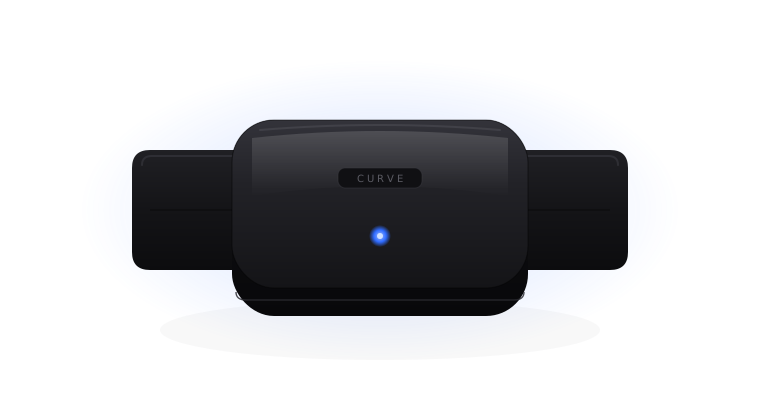
The Auromone Curve is designed to read cortisol from a trace of sweat on your wrist through the day and night, so you can see the shape of your own rhythm rather than infer it from your reflection. It is in development and isn't on sale yet, and we publish no accuracy figure; how a cortisol wearable is validated sets out the stages and where the Curve stands. To be clear about what it is not: it is not a weight-loss tool, it will not tell you why your waist changed, and it cannot detect or rule out any condition on this page. It does not replace clinical testing.
What to take from this
- A growing belly you cannot explain is a doctor's question first. Fluid, ovarian cancer, heart failure and Cushing's all get filed as weight gain, and slow does not mean safe.
- "Cortisol belly" is a label, not a diagnosis. Physicians do not use the term, and nothing tests for it.
- Cortisol does steer fat inward at high, sustained levels. Visceral fat responds more strongly to it, and Cushing's and long-term steroids show the effect plainly.
- Everyday stress is a weaker story. Blood cortisol is normal or low in obesity; the links that exist are small and may run both ways.
- Sleep, appetite and menopause carry much of the weight. Short sleep added weight within 5 days in a lab study; the menopause transition speeds up fat gain whatever cortisol does.
- Movement shifts visceral fat even when the scale does not. No supplement has been shown to do it by lowering cortisol.
This page is for general education and is not medical advice. The Auromone Curve is designed as a general wellness device, not a diagnostic, and does not replace clinical testing. It is in development and not yet on sale. A persistent or unexplained change in your abdomen deserves a proper medical assessment.
References
- Lee MJ, Pramyothin P, Karastergiou K, Fried SK. Deconstructing the roles of glucocorticoids in adipose tissue biology and the development of central obesity. Biochimica et Biophysica Acta. 2014;1842(3):473-481. (2 to 4-fold greater glucocorticoid binding and receptor expression in omental than subcutaneous fat; 2 to 5-fold increases in central fat in Cushing's syndrome; "circulating cortisol levels have been shown to be normal or low in obesity"; 11β-HSD1 findings and their unsettled causal role.)
- Epel ES, McEwen B, Seeman T, et al. Stress and body shape: stress-induced cortisol secretion is consistently greater among women with central fat. Psychosomatic Medicine. 2000;62(5):623-632. (59 premenopausal women, 30 high and 29 low waist-to-hip ratio; greater first-session cortisol; lack of habituation on days 2 and 3 in lean women with central fat; cross-sectional.)
- Epel E, Lapidus R, McEwen B, Brownell K. Stress may add bite to appetite in women: a laboratory study of stress-induced cortisol and eating behavior. Psychoneuroendocrinology. 2001;26(1):37-49. (59 premenopausal women; high reactors ate more calories on the stress day and more sweet food across days.)
- Jackson SE, Kirschbaum C, Steptoe A. Hair cortisol and adiposity in a population-based sample of 2,527 men and women aged 54 to 87 years. Obesity. 2017;25(3):539-544. (Correlations of 0.102 with weight, 0.101 with BMI and 0.082 with waist circumference; raised waist defined as 102 cm or more in men and 88 cm or more in women; association with obesity persisting over 4 years.)
- van der Valk ES, Savas M, van Rossum EFC. Stress and obesity: are there more susceptible individuals? Current Obesity Reports. 2018;7(2):193-203. (Long-term cortisol related to abdominal obesity on average; "not all obese patients have elevated cortisol levels"; individual glucocorticoid sensitivity; the proposed vicious circle.)
- Curtis JR, Westfall AO, Allison J, et al. Population-based assessment of adverse events associated with long-term glucocorticoid use. Arthritis and Rheumatism. 2006;55(3):420-426. (2,446 respondents taking glucocorticoids for 60 days or more; weight gain the most common self-reported adverse event, at 70%; dose-dependent, and linked to duration even at low doses.)
- National Institute of Diabetes and Digestive and Kidney Diseases. Cushing's Syndrome. (Weight gain, thin arms and legs, round face, fatty hump between the shoulders, wide purple stretch marks; about 40 to 70 people per million; long-term high-dose glucocorticoids the most common cause; usually curable but can be fatal if not treated.)
- Nieman LK, Biller BM, Findling JW, et al. The diagnosis of Cushing's syndrome: an Endocrine Society clinical practice guideline. Journal of Clinical Endocrinology and Metabolism. 2008;93(5):1526-1540. (Features that best discriminate: easy bruising, facial plethora, proximal myopathy, striae especially if reddish purple and wider than 1 cm; test people with multiple and progressive features; urine cortisol, late-night salivary cortisol or dexamethasone suppression as initial tests, with a second test after an abnormal result.)
- Leproult R, Copinschi G, Buxton O, Van Cauter E. Sleep loss results in an elevation of cortisol levels the next evening. Sleep. 1997;20(10):865-870. (Evening cortisol 37% and 45% higher after partial and total sleep deprivation; quiescent period delayed by at least 1 hour.)
- Spiegel K, Tasali E, Penev P, Van Cauter E. Sleep curtailment in healthy young men is associated with decreased leptin levels, elevated ghrelin levels, and increased hunger and appetite. Annals of Internal Medicine. 2004;141(11):846-850. (12 men; leptin down 18%, ghrelin up 28%, hunger up 24%, appetite up 23%, calorie-dense high-carbohydrate foods up 33% to 45%.)
- Markwald RR, Melanson EL, Smith MR, et al. Impact of insufficient sleep on total daily energy expenditure, food intake, and weight gain. PNAS. 2013;110(14):5695-5700. (16 adults; 5 days of insufficient sleep; energy expenditure up about 5%; weight gain 0.82 kg; appetite hormones signalled excess energy stores; women lost dietary restraint.)
- Lovejoy JC, Champagne CM, de Jonge L, Xie H, Smith SR. Increased visceral fat and decreased energy expenditure during the menopausal transition. International Journal of Obesity. 2008;32(6):949-958. (Visceral fat 88.0 to 97.5 cm² over 4 years in the 51 women who became postmenopausal, significant; 88.6 to 105.0 cm² in those who stayed premenopausal, not significant.)
- Greendale GA, Sternfeld B, Huang M, et al. Changes in body composition and weight during the menopause transition. JCI Insight. 2019;4(5):e124865. (SWAN: rate of fat gain doubled at the start of the transition, lean mass declined, both until about 2 years after the final period; no acceleration in weight.)
- Verheggen RJ, Maessen MF, Green DJ, et al. A systematic review and meta-analysis on the effects of exercise training versus hypocaloric diet: distinct effects on body weight and visceral adipose tissue. Obesity Reviews. 2016;17(8):664-690. (117 studies, 4,815 people; without weight loss, exercise linked to a 6.1% fall in visceral fat against 1.1% for diet.)
- American Association of Clinical Endocrinology. What is "cortisol belly"? (A popular, nonmedical term used on social media; "not a medical term used by physicians"; more accurately called visceral fat.)
- NHS. Ovarian cancer: symptoms. (The four main symptoms, frequently, roughly 12 or more times a month; see a GP if you have any symptoms; go back if they have not gone away, are worse or more frequent.)
- National Institute for Health and Care Excellence. Suspected cancer: recognition and referral (NG12), ovarian cancer. (Ascites or a pelvic or abdominal mass on examination triggers a suspected cancer pathway referral; symptoms persistent or frequent, particularly more than 12 times per month, especially at 50 or over; weight loss, fatigue or bowel change; IBS-like symptoms at 50 or over; CA125 from age 40 with age-based thresholds for urgent ultrasound of the abdomen and pelvis; ultrasound under 40. Recommendations updated 2026.)
- Bankhead CR, Collins C, Stokes-Lampard H, et al. Identifying symptoms of ovarian cancer: a qualitative and quantitative study. BJOG. 2008;115(8):1008-1014. (Persistent abdominal distension in 38 of 44 cancer cases, adjusted OR 5.2, 95% CI 1.3 to 20.5; fluctuating distension not significantly associated.)
- National Cancer Institute, SEER Cancer Stat Facts. Ovarian Cancer. (54% diagnosed at distant stage; 5-year relative survival 91.9% localized and 31.5% distant, SEER 2016 to 2022.)
- Cleveland Clinic. Ascites. (Cirrhosis the most common cause; also heart failure, kidney failure and cancer; with cirrhosis, contact a provider for a gain of more than 2 pounds a day for 3 days in a row, a growing belly or shortness of breath; go to the emergency room for fever or intense stomach pain.)
- MedlinePlus, U.S. National Library of Medicine. Cirrhosis. (Get emergency help for abdominal or chest pain, fever, confusion or a change in alertness, rectal bleeding, vomiting blood, vomiting more than once a day, or shortness of breath.)
- Merck Manual, Professional Edition. Spontaneous Bacterial Peritonitis (SBP). (Signs may include fever, malaise, encephalopathy, worsening hepatic failure and unexplained clinical deterioration; peritoneal signs may be diminished by ascitic fluid.)
- Cleveland Clinic. Heart failure. (Swelling in the ankles, legs and belly; a full or hard stomach; shortness of breath that may wake you at night or at rest; call 911 for new chest pain, severe trouble breathing or symptoms that suddenly get much worse.)
- Cleveland Clinic. Cirrhosis of the liver. (Yellowing of the skin and eyes and abdominal swelling as later symptoms.)
- National Institute of Diabetes and Digestive and Kidney Diseases. Definition and facts of NAFLD and NASH. (About 24% of US adults; not caused by heavy alcohol use; also referred to as MASLD; NASH may lead to cirrhosis.)