What are the stress hormones?
They are the hormones released by two systems that respond to a stressor at different speeds. The StatPearls physiology chapter on the stress reaction splits them exactly that way: a quick response from the sympathetic-adreno-medullar system, which increases secretion of noradrenaline and adrenaline into the circulation, and a slow response from the HPA axis, in which corticotropin-releasing hormone leads to adrenocorticotropic hormone, which leads to cortisol.
The plural matters more than most articles admit. When someone says they want to lower their stress hormones, they are usually picturing cortisol, and cortisol is the slow one. The hormone behind the feeling of a near miss in traffic is already gone by the time you have parked.
| Hormone | Where it comes from | Speed | What it does |
|---|---|---|---|
| Noradrenaline norepinephrine |
The primary neurotransmitter released from postganglionic sympathetic nerve terminals, and a hormone secreted by the adrenal medulla. | Fast. Circulating half-life about 2.4 minutes. | Acts at α1 and β1 receptors. Vasoconstriction and a rise in systemic vascular resistance. |
| Adrenaline epinephrine |
Primarily synthesised in the chromaffin cells of the adrenal medulla. | Fast. Plasma half-life described as typically less than 5 minutes. | With noradrenaline: higher heart rate, cardiac output, blood pressure and blood glucose, plus lipolysis. |
| CRH corticotropin-releasing hormone |
The paraventricular nucleus of the hypothalamus. | Starts the slow wave. | Stimulates the anterior pituitary to release ACTH. Also coordinates behavioural and sympathetic responses. |
| Vasopressin AVP, antidiuretic hormone |
A subset of the same hypothalamic neurons, which make and secrete both CRH and AVP. | Released alongside CRH. | Synergistic with CRH on ACTH release. Endotext notes that the proportion of neurons co-secreting both rises significantly under stress. |
| ACTH adrenocorticotropic hormone |
The anterior pituitary. | The middle step. | Stimulates the adrenal cortex to secrete glucocorticoids, cortisol chief among them. |
| Cortisol | The adrenal cortex. Healthy adults produce roughly 8 to 30 mg a day. | Slow. Plasma half-life about 66 minutes at normal levels. | Raises glucose, damps immune activity, and follows a daily rhythm. Feeds back to inhibit CRH and ACTH. |
| Prolactin | The anterior pituitary. | Rises with stress among other triggers. | StatPearls lists stress among the stimuli for prolactin release, and says that during stress it contributes to modulating adrenal ACTH sensitivity. |
Which hormone is the stress hormone?
Cortisol. The StatPearls physiology chapter opens by calling it "the principal stress hormone", and it is the one meant whenever an article uses the singular. Adrenaline has the better name recognition, since nobody says they got a cortisol rush, but adrenaline is a burst and cortisol is a curve.
That is not a ranking of importance. It is a statement about duration. Adrenaline answers the question "what happened in the last few minutes"; cortisol answers "what kind of day has this been", which is a question you can actually act on. The relationship between the feeling of stress and the hormone itself is its own subject, and cortisol and stress covers what ongoing pressure does to the pattern.
What happens in the first minutes: adrenaline and noradrenaline
The fast wave is chemically simple and physiologically loud. Noradrenaline, adrenaline and dopamine are the catecholamines, all three built from the amino acid tyrosine. Noradrenaline and adrenaline are secreted by the adrenal medulla and by sympathetic nerve endings, and adrenaline is made primarily in the chromaffin cells of the medulla.
StatPearls lists what that release produces: contraction of smooth and cardiac muscle, vasoconstriction, increased blood pressure, heart rate, cardiac output and skeletal muscle blood flow, sodium retention, higher glucose through glycogenolysis and gluconeogenesis, and lipolysis. Read as a list it is unremarkable. Felt in a body it is a pounding chest, cold hands and a stomach that has gone quiet.
The interesting part is how briefly it lasts. Noradrenaline's half-life in the circulation is about 2.4 minutes, and adrenaline's plasma half-life is described as typically less than 5 minutes, with monoamine oxidase and catechol-O-methyltransferase breaking it down into metabolites including vanillylmandelic acid. There is nothing left to measure by mid-afternoon from a 9am argument.
A laboratory result shows the same shape from the outside. In a 2012 PLoS ONE study, salivary alpha-amylase, which Nater and Rohleder have proposed as a marker of sympathetic nervous system activity, peaked immediately after a stress task and was back to baseline 20 minutes later. Salivary cortisol in the same participants was still climbing at that 20-minute mark.
What happens over the next hour: CRH, ACTH and cortisol
The slow wave is a relay, and each handoff costs time. CRH is released from the paraventricular nucleus of the hypothalamus. It stimulates the anterior pituitary to release ACTH into the bloodstream. ACTH stimulates the adrenal cortex to secrete cortisol. Cortisol then inhibits both the hypothalamus and the pituitary, which is how the loop closes itself.
A subset of those hypothalamic neurons secretes vasopressin as well as CRH, and vasopressin acts synergistically with CRH on ACTH release. The Endotext chapter by Tsigos, Kyrou, Kassi and Chrousos notes that the share of neurons doing both increases significantly under stress conditions, which is one reason the response to a prolonged stressor is not simply a larger version of the response to a brief one.
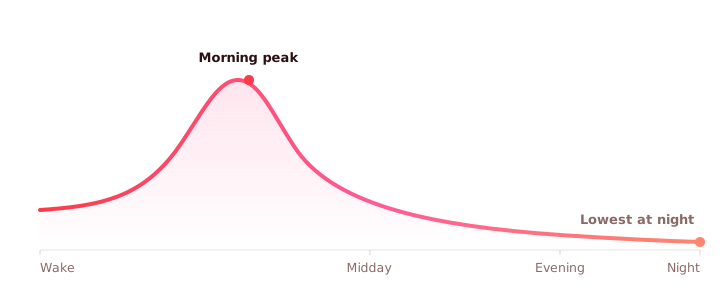
Cortisol's persistence is the other half of the story. Its plasma clearance is described as rapid, with a half-life of 66 minutes at normal hormone levels, rising to 120 minutes under large steroid loads. Against 2.4 minutes, 66 minutes is a different category of signal. Most of it is not free in the blood either: StatPearls puts 80% bound to cortisol-binding globulin and 10% to albumin.
One more correction worth making, because it undercuts a lot of confident writing. Cortisol does not rise to everything. Dickerson and Kemeny's meta-analysis of 208 laboratory studies found that effects varied widely across tasks, that the largest cortisol and ACTH changes and the longest recovery times came from tasks that were both uncontrollable and socially evaluative, and that this "contradict[s] the belief that cortisol is responsive to all types of stressors". A later meta-analysis of the standard laboratory stress test, pooling 65 articles and 5,171 participants, put the average salivary cortisol reactivity effect size at 0.93.
Which hormones go down under stress?
A stress response is not only a set of things switching on. The Endotext chapter describes prolonged activation of the stress system pushing several other axes in the opposite direction:
- Reproductive. CRH suppresses gonadotropin-releasing hormone neurons directly, and indirectly by enhancing beta-endorphin secretion. Glucocorticoids exert inhibitory effects on GnRH neurons, on pituitary gonadotrophs and directly on the gonads. What that suppression looks like clinically, and why it is not simply a case of less cortisol being better, is in cortisol and estrogen.
- Growth. Prolonged HPA activation leads to suppression of growth hormone secretion and inhibition of somatomedin C, better known now as IGF-1.
- Thyroid. Chronic HPA activation is associated with decreased production of thyroid stimulating hormone and inhibited conversion of thyroxine, T4, to the more biologically active triiodothyronine, T3.
This is the part of the picture that makes "stress hormones" a bad shopping list and a good systems diagram. The hypothalamus and pituitary sit upstream of cortisol, of thyroid hormone and of the reproductive hormones, which is the reason a sustained change in one is rarely confined to one. The reproductive half of that wiring is worked through in cortisol and testosterone. That shared wiring is the subject of the rest of this section of the library.
Two limits, stated plainly. None of these suppressed hormones is something a wearable reads, and the Auromone Curve measures cortisol only. And because this paragraph touches reproductive signalling: the Curve is not a fertility device, is not for contraception, and is not for use in pregnancy.
Why do the two systems feel the same?
Because they talk to each other constantly, and because a body does not label its own sensations. Endotext describes the central stress system as running on "reciprocal reverberatory neural connections" between the CRH neurons and the noradrenergic neurons of the locus ceruleus, with each stimulating the secretion of the other. Goldstein's review adds that distress involves concurrent activation of the HPA and adrenomedullary systems, and that different stressors elicit different patterns of response rather than one uniform alarm.
So the honest answer to "is this adrenaline or cortisol" is that you cannot tell from the inside, and neither can anyone else without a test. Racing heart, sweating and shakiness are the fast wave's signature, and they are also the signature of several things that are not stress at all. That is the next section, and it is the one to read if any of this is happening to you right now rather than in theory.
When a stress symptom needs a doctor, not an explanation
The symptoms of an adrenaline surge overlap almost completely with the symptoms of emergencies. This is not a rare edge case; it is the ordinary situation, and the overlap runs in the direction that gets people hurt.
Call emergency services for any of these
- Chest pain, pressure, squeezing or heaviness, or pain moving from the chest to the arms, shoulder, neck, teeth, jaw, belly or back. MedlinePlus notes the pain "most often lasts longer than 20 minutes" and says to call 911 right away, not to drive yourself, and not to wait.
- Shortness of breath, heavy sweating, nausea and vomiting, fainting, lightheadedness or palpitations. All of these are on the MedlinePlus heart attack symptom list, and anxiety is on it too.
- Unusual tiredness for no reason, sometimes for days. The NHLBI lists this as a heart attack symptom and notes it is more common in women. Its guidance is to call 9-1-1 "even if you are not sure that you're having a heart attack".
What the absence of a sign does not do for you. MedlinePlus states that "some people (including older adults, people with diabetes, and women) may have little or no chest pain when they have a heart attack", and may instead have shortness of breath, fatigue and weakness. It also records that a silent heart attack, with no symptoms at all, can occur. No chest pain is not a reason to stay home. Nor is feeling anxious: the NIMH says panic attacks often include physical symptoms that might feel like a heart attack, which means the resemblance cannot be used as evidence in either direction.
Repeating episodes deserve a clinician even when each one passes. MedlinePlus describes pheochromocytoma, a rare adrenal tumour that releases too much adrenaline and noradrenaline, as producing attacks that "usually last from a few minutes to hours", most often with headache, palpitations, sweating and high blood pressure. Feeling fine between attacks is what the condition looks like, not proof against it. It is uncommon, accounting for less than 0.2% of diagnosed hypertension by one 2023 review's estimate, and it is diagnosed by clinicians with blood and urine testing, never by a wearable. The Auromone Curve does not detect, screen for or diagnose it, or anything else.
Say the symptom, not the label. Tell the clinician "I have chest pain" or "my heart races and I sweat and get a headache, in episodes". Opening with "I think it's stress" hands over the conclusion, and it is usually the one that closes the question. If you are having thoughts of harming yourself, call or text 988 in Canada or the United States, free and confidential, 24 hours a day.
The overlap between panic and cardiac symptoms deserves more room than a box, and it has a page of its own: cortisol and anxiety goes through what gets mistaken for what, in both directions.
Do stress hormones and sleep affect each other?
Yes, and the evidence runs from sleep to hormone, not only the other way. Leproult and colleagues sampled plasma cortisol across 32 hours in healthy young men under three conditions: normal sleep, partial sleep deprivation and total sleep deprivation. The difference showed up the following evening. Across the 6pm to 11pm window, cortisol was 37% higher after partial sleep loss and 45% higher after total sleep loss, and the onset of the quiet period of cortisol secretion was delayed by at least an hour.
That is a useful result for two reasons. It says a short night is not a neutral event for the slow wave, and it says the consequence arrives many hours later, at the time of day when you most want cortisol low. The authors concluded that even partial acute sleep loss delays recovery of the HPA axis from its early morning stimulation. The loop between them, in both directions, is covered in cortisol and sleep.
Can you test your stress hormones, and which test reads which?
There is no single stress hormone test. Each hormone has its own method, and the methods were built for different questions. Nothing on this list returns a number that means "your stress".
| What you want to know | What is actually measured | What that can and cannot show |
|---|---|---|
| Cortisol | Blood, saliva, urine or hair, depending on the question. A continuous sweat sensor is the newer option. | A timed sample describes that moment. Because cortisol follows a daily rhythm, the hour you sample changes the number more than most people expect. See the measurement guide. |
| Adrenaline and noradrenaline | Plasma or urinary catecholamines, or their metabolites. The Endocrine Society's guideline recommends initial testing with plasma free or urinary fractionated metanephrines. | These are ordered to investigate rare tumours, not to quantify a hard week. MedlinePlus notes urine is used more often "because catecholamine blood levels can change quickly and may also be affected by the stress of testing". |
| Sympathetic activity | Salivary alpha-amylase, in research settings. | Nater and Rohleder proposed it as a sensitive marker of sympathetic activity and stated plainly that "questions remain to be answered before sAA can be accepted as an index of SNS activity". It is not a clinical test. |
| A number from your watch | Heart rate and heart rate variability, converted into a stress estimate by the vendor's own formula. | Not a hormone at all. Useful as a signal of autonomic arousal, and it responds faster than cortisol, but it is inferred rather than measured. See cortisol compared with HRV. |
The catecholamine tests carry a detail worth sitting with. MedlinePlus lists the preparation: avoid caffeinated foods and drinks, alcohol and tobacco, bananas, citrus fruits and foods containing vanilla, and "avoid stress and vigorous exercise before your test". In other words, the fast hormones are measured under conditions carefully arranged to exclude the things that release them. That is correct laboratory practice for finding a tumour, and it is also why those tests can say nothing about a normal Tuesday.
To be exact about our own scope: the Auromone Curve measures cortisol, from sweat, continuously. It does not measure adrenaline, noradrenaline, ACTH, CRH, vasopressin, prolactin, thyroid or reproductive hormones. Further hormone sensors are planned for the same band, and only the cortisol sensor is being built.
Why a single stress-hormone reading says so little
Because two of the main ones are gone before you could sample them, and the third one moves all day on purpose. A plasma catecholamine result describes the minute the needle went in, and the needle itself is a stressor. A single cortisol result describes one point on a curve that is designed to be high in the morning and low at night.
Timing therefore decides the answer more than method does. The same person sampled at 8am and at 8pm should produce two very different cortisol numbers, and both can be ordinary. A number without its hour attached is close to uninterpretable, which is the argument made in full in when to test cortisol.
And the Dickerson and Kemeny finding cuts against the intuition here too. If cortisol does not rise to every stressor, then a reading taken after a stressful event is not a referendum on how stressful the event was.
What actually lowers stress hormones, and what only feels like it does
Two honest starting points, both from work cited above.
The fast wave lowers itself. At a half-life of roughly 2.4 minutes for noradrenaline, no routine, breathing pattern or supplement is going to beat the clock by much. Whatever you do after an adrenaline surge, the hormone is clearing while you do it. That is worth knowing before buying anything sold as an adrenaline remedy.
The slow wave responds to the shape of the situation, not to its volume. The largest cortisol responses in Dickerson and Kemeny's pooled data came from tasks that were uncontrollable and open to social judgement. That points somewhere more useful than a generic instruction to relax: the features to change are how much control you have and how exposed you are, not how busy you are.
Sleep is the third lever, and it has a number attached: 37% and 45% higher evening cortisol after partial and total sleep loss in the Leproult study. The everyday inputs, caffeine and alcohol and cold water and training, are covered with their evidence in what moves your cortisol, and the practical list is in how to lower cortisol. If a product is being sold to you for this, cortisol supplements is the sceptical read.
How would you see your own cortisol across a day?
Of all the hormones on this page, cortisol is the only one whose ordinary day has a shape worth watching, and the only one a person could reasonably follow outside a laboratory. The fast ones are over too quickly, and the upstream ones are pituitary and hypothalamic signals nobody samples at home.
The obstacle is sampling. A blood draw gives you one point and a needle. Saliva collections give you a handful of points and a schedule to keep. Both were designed for a clinic's question, not for an ordinary unplanned day with the evening included. The measurement guide compares the options honestly, including the ones we do not sell, and a continuous cortisol meter is what the missing option would look like. For the hormone itself, start at cortisol 101; for how a hard week shows up in it, stress and recovery.
This guide is for general wellness education only. The Auromone Curve is a general wellness device: it measures cortisol continuously, and it does not diagnose, treat, or cure any condition. It measures no hormone other than cortisol. It does not replace medical advice or laboratory testing. Symptoms that worry you deserve a proper medical assessment. Please talk to a healthcare provider.
References
- Chu B, Marwaha K, Sanvictores T, Awosika AO, Ayers D. Physiology, stress reaction. StatPearls, NCBI Bookshelf, 2024. (Quick response from the SAM system; slow response from the HPA axis; 80% of serum cortisol bound to cortisol-binding globulin, 10% to albumin.)
- Kaur J, Gandhi J, Sharma S. Physiology, cortisol. StatPearls, NCBI Bookshelf, updated 2025. ("The principal stress hormone"; diurnal rhythm; 8 to 30 mg produced per day; negative feedback on CRH and ACTH.)
- Khalil B, Rosani A, Warrington SJ. Physiology, catecholamines. StatPearls, NCBI Bookshelf, 2024. (Dopamine, noradrenaline and adrenaline derived from tyrosine; adrenal medulla and sympathetic nerve endings; metanephrine and VMA metabolites.)
- Smith MD, Maani CV. Norepinephrine. StatPearls, NCBI Bookshelf, 2024. (Half-life approximately 2.4 minutes; α1 and β1 activity.)
- Dalal R, Grujic D. Epinephrine. StatPearls, NCBI Bookshelf, 2024. (Plasma half-life "typically less than 5 minutes"; MAO and COMT metabolism.)
- Tsigos C, Kyrou I, Kassi E, Chrousos GP. Stress: endocrine physiology and pathophysiology. Endotext, NCBI Bookshelf, updated 2020. (CRH and AVP co-secretion and synergy; reciprocal CRH and locus ceruleus connections; suppression of GnRH, growth hormone and somatomedin C, TSH and T4 to T3 conversion.)
- Al-Chalabi M, Bass AN, Alsalman I. Physiology, prolactin. StatPearls, NCBI Bookshelf, 2023. (Stress among the stimuli for prolactin release; modulation of adrenal ACTH sensitivity during stress.)
- McKay LI, Cidlowski JA. Pharmacokinetics of corticosteroids. Holland-Frei Cancer Medicine, 6th ed, NCBI Bookshelf, 2003. (Cortisol plasma half-life 66 minutes at normal levels, 120 minutes with large steroid loads.)
- Jung C, Greco S, Nguyen HHT, et al. Plasma, salivary and urinary cortisol levels following physiological and stress doses of hydrocortisone in normal volunteers. BMC Endocrine Disorders. 2014. (Corroborates the 66-minute plasma half-life.)
- Goldstein DS. Adrenal responses to stress. Cellular and Molecular Neurobiology. 2010. (Different stressors elicit different patterns; distress involves concurrent HPA and adrenomedullary activation.)
- Dickerson SS, Kemeny ME. Acute stressors and cortisol responses: a theoretical integration and synthesis of laboratory research. Psychological Bulletin. 2004. (208 studies; uncontrollable and socially evaluative tasks produced the largest cortisol and ACTH changes.)
- Gu H, Ma X, Zhao J, Liu C. A meta-analysis of salivary cortisol responses in the Trier Social Stress Test. Comprehensive Psychoneuroendocrinology. 2022. (65 articles, 76 sub-studies, 5,171 participants; average effect size 0.93.)
- Maruyama Y, et al. Differences in salivary alpha-amylase and cortisol responsiveness following exposure to electrical stimulation versus the Trier Social Stress Tests. PLoS ONE. 2012. (Alpha-amylase peaked immediately after the task and returned to baseline by 20 minutes; cortisol was still rising at 20 minutes.)
- Nater UM, Rohleder N. Salivary alpha-amylase as a non-invasive biomarker for the sympathetic nervous system. Psychoneuroendocrinology. 2009.
- Leproult R, Copinschi G, Buxton O, Van Cauter E. Sleep loss results in an elevation of cortisol levels the next evening. Sleep. 1997. (37% and 45% higher evening cortisol after partial and total sleep deprivation in normal young men.)
- Lenders JW, Duh QY, Eisenhofer G, et al. Pheochromocytoma and paraganglioma: an Endocrine Society clinical practice guideline. J Clin Endocrinol Metab. 2014. (Initial biochemical testing with plasma free or urinary fractionated metanephrines.)
- MedlinePlus. Catecholamine tests. (Urine used more often; preparation restrictions including caffeine, alcohol, bananas, citrus, vanilla, stress and vigorous exercise.)
- MedlinePlus. Pheochromocytoma. (Attacks lasting a few minutes to hours; headache, palpitations, sweating, high blood pressure.)
- Patel D, et al. Pheochromocytoma: a troublesome tumor. Cureus. 2023. (Accounts for less than 0.2% of diagnosed hypertension cases.)
- MedlinePlus. Heart attack. (Symptom list; pain lasting longer than 20 minutes; little or no chest pain in older adults, people with diabetes and women; silent heart attack; call 911.)
- National Heart, Lung, and Blood Institute. Heart attack symptoms. (Unusual tiredness for days, more common in women; call 9-1-1 even if unsure.)
- National Institute of Mental Health. Panic disorder: when fear overwhelms. (Panic attack symptoms can feel like a heart attack.)