Symptoms that need a clinician now, not an explanation
This section is first on purpose. Menopause is not a disease, as the National Institute on Aging puts it plainly, and most of what follows a final period is ordinary. The problem is that after menopause there is a ready-made reason for almost any symptom, and a ready-made reason is the best hiding place a serious condition could ask for.
Take these to a clinician, and use the words:
- Any vaginal bleeding after menopause. The NHS is unambiguous: menopause is usually diagnosed in women over 45 who have not had a period for more than a year, and any bleeding after that needs to be checked by a GP, even if it happened only once, even if it is spotting or pink or brown discharge, even with no other symptoms. Ask for the referral. The NHS states you should not have to wait more than 2 weeks to see a specialist. And the inverse matters as much: no bleeding does not mean nothing is wrong. Ovarian cancer usually does not announce itself with bleeding at all.
- An abdomen that is changing shape, rather than gradually gaining fat. The NHS lists the main symptoms of ovarian cancer as a swollen tummy or bloating, pain in the tummy or pelvis, no appetite or feeling full quickly, and needing to pee urgently or more often, occurring frequently, roughly 12 or more times a month. This is not postmenopausal weight gain, and it is misread as postmenopausal weight gain constantly. Say the sentence out loud at the appointment: I have had bloating on most days for several weeks and I would like ovarian cancer excluded. The NHS route from there is a CA125 blood test and, if it is raised, an ultrasound scan of the abdomen and pelvis.
- Chest pain or pressure. Call emergency services. You may have read that women’s heart attacks do not involve chest pain. In a study of 1,941 patients attending an emergency department with suspected acute coronary syndrome, chest pain was the presenting symptom in 92% of the women (698 of 756) and 91% of the men (1,081 of 1,185). It is not a male symptom. And it is not a filter either: about 8% of the women presented without it, so breathlessness, sweating, nausea, or pain spreading to the jaw, back or arm still needs emergency assessment on its own. Cardiovascular disease is the leading cause of death in women and risk increases notably after menopause, according to the American Heart Association’s scientific statement on the menopause transition. Say the words I think I am having a heart attack, and do not drive yourself.
- A heartbeat that is fast, pounding or irregular with faintness, breathlessness or chest discomfort. The NHS lists palpitations among ordinary menopause symptoms, which is precisely why this combination gets waved through. The combination needs urgent care.
- Losing weight without trying. This page is about weight gain, because that is what people search for. Weight coming off on its own is on the NHS ovarian cancer symptom list and needs assessment.
If your menopause did not arrive the usual way, this page is still about you. Surgical menopause, early menopause, and menopause after cancer treatment all count. Two practical notes: if your uterus was removed you cannot use bleeding as a signal at all, so the abdominal symptoms carry more weight, and if you are taking menopausal hormone therapy the cortisol research below does not describe you, because the main study on this page excluded women using hormone therapy or corticosteroids.
If you are struggling with thoughts of harming yourself, please stop researching and reach a person. In Canada and the United States, call or text 988 for the Suicide Crisis Helpline. Elsewhere, contact your local emergency number or crisis line. That matters more than anything else on this page.
Does cortisol change during and after menopause?
Average overnight cortisol is at its highest around the late transition and back down in early postmenopause, and the differences between women are larger than the differences between the stages.
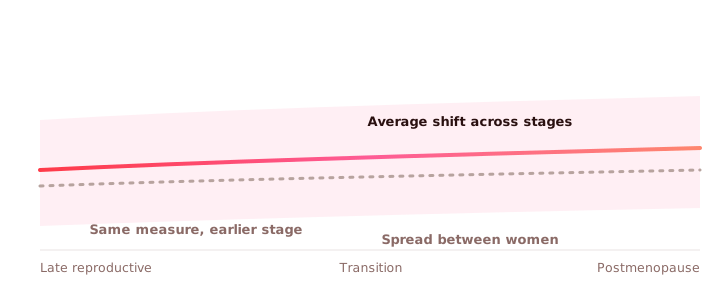
The clearest data come from the Seattle Midlife Women’s Health Study, which followed 132 women who were not using hormone therapy or corticosteroids, collecting up to 5,218 observations between 1990 and 2005. Cortisol was measured in overnight urine and expressed per milligram of creatinine, and menopausal stage was assigned from menstrual calendars rather than from any hormone reading.
| Menopausal stage | Mean overnight cortisol | Standard deviation |
|---|---|---|
| Early menopausal transition | 45.3 ng/mg creatinine | 22.5 |
| Late menopausal transition | 53.4 ng/mg creatinine | 29.6 |
| Early postmenopause | 46.4 ng/mg creatinine | 25.9 |
Read that table the way a statistician would. The early postmenopause average is back within a point and a half of the early transition, and a woman one standard deviation above the mean in early postmenopause sits well above the late transition average. Stage tells you very little about any individual, which is the most useful thing to know before you compare yourself with a paper.
There is a further limitation. The authors tried to model cortisol with menopausal stage as the measure of time, and that model failed to converge. When the stages were added as covariates alongside age, that model did not converge either. So the stage figures above are descriptive averages, not the output of a fitted model, and they should not be quoted as an effect of menopause on cortisol.
What the longitudinal studies actually measured
They measured what cortisol travelled with, and the answer was biology rather than biography. In the Seattle models, with age as the measure of time, three menopause-related markers were each significantly associated with higher overnight cortisol: estrone glucuronide, a urinary marker of estrogen (beta 0.17), testosterone (beta 0.35) and FSH (beta 0.07), all at p less than 0.0001. Epinephrine (beta 0.02) and norepinephrine (beta 0.15) were also significantly associated, both at p less than 0.0001. Perceived stress was not significantly related to overnight cortisol at all.
Now the arm that cuts against the tidy story, because it is the one that gets left out. Estrone glucuronide falls across the menopausal transition while FSH rises, so the two markers move in opposite directions. Both were positively associated with cortisol. That combination does not support a simple mechanism in which estrogen falls and cortisol therefore rises.
Hot flash severity behaved unexpectedly too. It was a statistically significant covariate, but the coefficient was negative (beta −0.02, p = 0.01) and, as the authors note, small next to the coefficients for estrone, testosterone and FSH. The same research group had previously reported that rising cortisol was associated with more severe hot flashes. Two analyses, two directions, one honest conclusion: the hot flash and cortisol relationship is not settled.
“MT stage, symptoms, and social, stress-related, and health-related factors had little relationship to overnight cortisol levels when other biological indicators were considered.”
Woods NF, Mitchell ES, Smith-DiJulio K. Menopause, 2009. MT means menopausal transition.
Income adequacy, role burden, social support, employment and parenting had little to do with overnight cortisol once the hormone measurements were in the model.
So what does change after the transition ends?
Mostly age, and age does this in men too. A reanalysis of 177 around-the-clock plasma cortisol profiles from 90 men and 87 women aged 18 to 83, pooled from 7 laboratories, found that mean cortisol levels increased by 20% to 50% between the ages of 20 and 80 in both sexes. The overnight nadir, the lowest point of the day, rose progressively with age in both sexes. The daily rhythm survived into old age, but its amplitude was dampened and its timing shifted earlier.
One finding in that analysis was specific to women: an age-related elevation in the timing of the morning peak occurred in women and not in men. The authors also reported that premenopausal women had slightly lower mean cortisol than men of the same age, mainly because their morning maxima were lower.
The caveat is real and worth stating. That work pooled cross-sectional profiles across seven laboratories and was not designed to separate ovarian ageing from chronological ageing. It cannot tell you which part of a postmenopausal woman’s cortisol pattern belongs to menopause and which belongs to being older. What it does establish is that a flatter, higher, earlier cortisol rhythm is a feature of ageing across both sexes, which makes it a poor candidate for a uniquely menopausal problem. If you want the baseline shape this is departing from, Cortisol 101 covers the ordinary daily curve.
Do hot flashes and night sweats raise cortisol, or the reverse?
Where it has been measured directly, the flash came first and cortisol followed. In a 1984 study, 18 postmenopausal women with severe hot flashes had continuous finger temperature and skin resistance recordings alongside serial hormone measurements. ACTH, the pituitary signal that tells the adrenal glands to release cortisol, peaked about 5 minutes after the skin temperature rise began. Mean serum cortisol increased about 15 minutes after the flash. Growth hormone peaked at 30 minutes and LH at 15. Prolactin, TSH and FSH did not move significantly.
That sequence describes cortisol as a consequence of the flash rather than its cause, which is the opposite of how the relationship is usually sold.
A 2020 study in Menopause looked at the other end of the day in 101 perimenopausal women aged 45 to 55, who completed a 24-hour hot flash diary once a week for 12 weeks and gave saliva samples at waking and 30 minutes later to capture the cortisol awakening response. The results split cleanly:
- Within a woman, week to week, changes in hot flash frequency, severity and bother were not related to that week’s awakening response. A bad week of flashes did not show up as a different morning cortisol pattern.
- Between women, more total hot flashes, greater severity and greater bother were each associated with a blunted awakening response, and that held after adjusting for urinary estrogen and progesterone metabolites and for self-reported sleep quality.
Those participants were perimenopausal, not postmenopausal, so the finding belongs to the transition. A blunted awakening response is also a group-level statistical pattern, not a finding about any one person and not a diagnosis of anything.
And there is a third arrow that most articles never mention. The National Institute on Aging states that research now suggests waking from sleep may itself trigger hot flashes, rather than the other way around. If that holds, then the chain most women are given, where the flash wakes you and the waking raises cortisol, may run backwards at its first link. The relationship between the night and the cortisol rhythm is covered in more detail in cortisol and sleep.
Is cortisol behind menopause weight gain?
The strongest body-composition evidence does not implicate cortisol, for the simple reason that it did not measure cortisol. The Study of Women’s Health Across the Nation followed 1,246 women through the transition with repeated body-composition scans, and what it found was a change in timing rather than a change in willpower.
| Measure | Before the transition | During the transition | After menopause |
|---|---|---|---|
| Fat mass | +1.0% a year (about 0.25 kg) | +1.7% a year (about 0.45 kg) | Flat, a slope of about zero |
| Lean mass | +0.2% a year | −0.2% a year | Flat, a slope of about zero |
| Body weight | Climbing steadily | No acceleration at the transition | Trajectory became flat |
Two details in that table are the whole answer. First, the acceleration in fat gain began about 2 years before the final period and stabilised about 1.5 years after it, a window of roughly three and a half years that tracks ovarian ageing rather than chronological age. Second, weight itself did not accelerate. What changed was the ratio: more fat, less lean tissue, at a similar overall weight. That is why the scale can be unhelpful and the clothes are not.
Here is what nobody can honestly tell you. The cortisol data and the body-composition data come from different cohorts, using different measurements, and neither study tested one against the other. Welding them together to claim that cortisol redistributes fat in menopause would be an invention. Cortisol’s effect on where the body stores fat is well documented at pathological extremes, which is a different claim from ordinary day-to-day variation. Cortisol and weight works through what the evidence supports and what it does not, including the parts the internet inflates.
One more time, because this section is where it gets missed
Everything above offers a comfortable explanation for a changing middle. A changing middle is also how ovarian cancer presents, and it is dismissed as midlife spread more reliably than almost any other cancer.
Gradual fat gain feels like fat. Ovarian cancer feels like swelling, it comes with feeling full quickly, and it does not resolve. Persistent bloating, an increasing abdominal size, early satiety, pelvic pain or new urinary urgency on roughly 12 or more days a month is not this section. Go and be checked, and use those words.
Is this perimenopause or menopause, and why it matters here
Menopause is a single point in time that can only be identified in hindsight. The National Institute on Aging defines it as the stage when menstrual periods have stopped permanently, and states you will only know you have reached it once you have gone a full year with no period or spotting. Most women begin the transition between 45 and 55, the average age of menopause in the United States is 52, and symptoms can last between 2 and 8 years.
The distinction matters on this page for one specific reason: almost all the cortisol research is about the transition, not about the decades after it. The Seattle study’s early postmenopause window was within 5 years of the final period. The 2020 awakening-response study enrolled perimenopausal women. If you are 8 or 15 years past your last period and looking for research about your cortisol, it largely does not exist, and anyone presenting confident numbers for that stage is extrapolating.
If you are still in the transition, with periods that are irregular rather than finished, the sibling to this page is the better read: cortisol and perimenopause covers the sleep-fragmentation loop and the conditions that get mistaken for the transition. For how cortisol sits alongside the rest of the endocrine system, Beyond cortisol is the cluster index.
One practical note for staging. If you have had a hysterectomy but kept your ovaries, you have no periods to count and cannot date your own menopause from bleeding. Ask your clinician which markers apply to you, rather than assuming from symptoms.
What else explains these symptoms
After menopause, the menopause explanation has no end date, which is what makes it dangerous. A woman of 58 with fatigue, weight change and broken sleep can be told it is hormonal for years if nobody checks. Every candidate below is settled with a test rather than an opinion.
- Sleep apnea, which becomes considerably more common after menopause. In a cross-sectional analysis of 1,459 women in the 2015 to 2016 US National Health and Nutrition Examination Survey, symptoms of obstructive sleep apnea were reported by 36.0% of premenopausal and 53.4% of postmenopausal women, and after adjusting for body mass index, menopausal status was associated with a higher prevalence (odds ratio 1.57, 95% confidence interval 1.16 to 2.13). That study measured questionnaire-reported symptoms at a single point in time, so it cannot prove menopause causes apnea. It is more than enough reason to ask for a sleep study if you snore, wake gasping, or are exhausted despite adequate time in bed.
- Thyroid disease. An underactive thyroid produces fatigue, weight change, low mood and hair thinning, which is most of the NHS list of menopause symptoms rewritten. It is a blood test.
- Anemia, diabetes and depression. All common, all treatable, all routinely written off in this age band, and all diagnosed by testing rather than by story. Depression in particular is not something to endure because a phase of life is supposed to explain it.
- Alcohol. The National Institute on Aging puts it flatly: alcohol will not help you sleep, and even small amounts make it harder to stay asleep. It produces broken nights, night sweats, palpitations, low mood and central weight gain, and it is the most changeable item on this list.
- Your medicines, including steroids. More than 10 million Americans take glucocorticoids each year, according to the NIDDK, and cortisol excess caused by medication is far more common than the kind caused by a tumour. A pharmacist can review the whole list with you in one appointment.
And the rare one people are really searching for. Cushing’s syndrome is genuine cortisol excess, and the NIDDK describes it as rare, with estimates ranging from about 40 to 70 people per million, affecting roughly three times as many women as men and most often adults aged 30 to 50. Its recognisable features include weight gain with thin arms and legs, a round face, increased fat around the base of the neck, easy bruising and wide purple stretch marks. Those features raise the question. Their absence does not settle it, which is exactly why it is diagnosed with laboratory testing by a clinician and never from a photograph, a symptom list, or a wearable. Our guide to why cortisol disorders are hard to diagnose explains what makes that testing so difficult.
What a cortisol reading can and cannot tell you here
A cortisol number cannot stage menopause, cannot confirm it, and cannot explain a symptom on its own. None of the studies on this page used cortisol to determine where a woman was in the transition. They used menstrual calendars. Menopause is recognised from menstrual history, and the hormone tests that sometimes support it are FSH and estrogen, ordered and interpreted by a clinician, not cortisol.
There is a second limit that trips up anyone comparing themselves with a paper. The research quoted here used three different matrices: overnight urine standardised to creatinine in the Seattle study, plasma in the ageing analysis, and saliva in the awakening-response study. Those are different measurements with different numbers and different reference ranges, and they are not interchangeable. A sweat reading is a fourth thing again. Normal cortisol levels sets out what reference ranges can and cannot do, and the best time to test cortisol explains why the hour of a sample is part of its result. And if you take estrogen in any form, cortisol and estrogen explains why an oral preparation can raise a total cortisol result on its own.
What we build, stated plainly so there is no gap for you to fill in. Auromone makes the Curve, a general wellness device that measures cortisol continuously from a trace of sweat at the wrist. It measures cortisol and no other hormone. It does not measure estrogen, progesterone, FSH or testosterone. It does not detect, screen for or diagnose menopause, Cushing’s syndrome, thyroid disease, sleep apnea, heart disease or any cancer, and it is not a fertility test or a contraceptive. It can show you the shape of your own day. Everything in the section above this one needs a clinician and a blood test.
What helps, and what to ask for
General measures, not medical advice, and not a replacement for the tests named above:
- Treat the sleep directly. The NIA recommends a regular sleep and wake schedule, a bedroom kept at a comfortable temperature, avoiding large meals and late caffeine, and, where routine changes are not enough, cognitive behavioural therapy for insomnia, which it notes has been shown to improve sleep in women with menopausal symptoms.
- Have the treatment conversation properly. The NHS lists hormone replacement therapy first among the treatments for menopause symptoms, with progestogen required alongside estrogen if you still have a uterus, and testosterone available through a menopause specialist for low libido. It also lists non-hormonal routes, including antidepressants for low mood and cognitive behavioural therapy or clonidine for hot flushes and night sweats. Which fits you depends on your history, which is why it is a conversation with a clinician rather than a decision taken from an article.
- Defend the lean tissue. The SWAN data show lean mass slipping from a small annual gain to a small annual loss across the transition, and the NHS lists weakening bones among the effects of menopause. Put resistance training and bone health on the agenda at your next appointment, before a fracture does.
- Anchor the morning. A steady wake time and early daylight support the rhythm that ageing tends to flatten and shift earlier, and it is the one input you control every day.
This guide is for general education only. The Auromone Curve is a general wellness device, not a diagnostic, and does not replace medical advice or laboratory testing. Symptoms after menopause deserve proper assessment rather than assumption. Please talk to a healthcare provider.
References
- Woods NF, Mitchell ES, Smith-DiJulio K. Cortisol levels during the menopausal transition and early postmenopause: observations from the Seattle Midlife Women’s Health Study. Menopause. 2009;16(4):708–718. (Source for the stage averages and standard deviations, the estrone glucuronide, testosterone, FSH, epinephrine and norepinephrine coefficients, the negative hot flash severity coefficient, the null result for perceived stress, and the models that failed to converge.)
- Effects of gender and age on the levels and circadian rhythmicity of plasma cortisol. Journal of Clinical Endocrinology and Metabolism. 1996. (Source for the 20% to 50% rise between ages 20 and 80 in both sexes, the rising nocturnal nadir, and the dampened, phase-advanced rhythm.)
- Changes in body composition and weight during the menopause transition. JCI Insight. 2019. (Source for the fat mass and lean mass rates, the 2 years before and 1.5 years after the final menstrual period window, and the flat weight trajectory.)
- Pituitary hormones during the menopausal hot flash. Obstetrics and Gynecology. 1984. (Source for ACTH peaking about 5 minutes after the flash and mean serum cortisol rising about 15 minutes after it.)
- Perimenopausal vasomotor symptoms and the cortisol awakening response. Menopause. 2020. (Source for the null within-person result and the between-person association with a blunted awakening response in 101 women aged 45 to 55.)
- Presenting symptoms in men and women diagnosed with myocardial infarction using sex-specific criteria. Journal of the American Heart Association. 2019. (Source for chest pain in 92% of women and 91% of men among 1,941 patients with suspected acute coronary syndrome.)
- Menopause transition and cardiovascular disease risk: a scientific statement from the American Heart Association. Circulation. 2020. (Source for cardiovascular disease being the leading cause of death in women and risk increasing after menopause.)
- National Institute on Aging. What is menopause? (Source for the 12-month definition, the average age of 52 in the United States, the 45 to 55 window, the 2 to 8 year symptom range, and menopause being a normal part of ageing rather than a disease.)
- National Institute on Aging. Sleep problems and menopause: what can I do? (Source for waking possibly triggering hot flashes rather than the reverse, the sleep recommendations, the alcohol statement, and cognitive behavioural therapy for insomnia.)
- NHS. Postmenopausal bleeding. (Source for any bleeding after menopause needing to be checked and the 2-week specialist referral.)
- NHS. Ovarian cancer symptoms. (Source for the main symptoms, the roughly 12 or more times a month frequency, unintentional weight loss, and the CA125 and ultrasound route.)
- NHS. Menopause and perimenopause symptoms and treatment. (Source for palpitations and bone density among menopause effects, and for the hormonal and non-hormonal treatment options.)
- Menopause and obstructive sleep apnea: revealing an independent mediating role of visceral fat beyond body mass index. BMC Endocrine Disorders. 2025. (Source for 36.0% versus 53.4% reporting sleep apnea symptoms and the adjusted odds ratio of 1.57.)
- NIDDK. Cushing’s syndrome. (Source for the 40 to 70 per million estimate, the sex and age distribution, the recognisable features, and more than 10 million Americans taking glucocorticoids each year.)